Introduction
The University of Oxford is one of the most famous educational institutions in the world and the oldest university in the English-speaking world. Its history stretches back more than nine centuries, although there is no single officially recognized date of foundation. Evidence shows that teaching was taking place in Oxford by 1096. Over the centuries, Oxford developed from a medieval centre of religious and scholarly learning into a vast international university renowned for teaching, research, literature, science, politics, medicine, philosophy and countless other fields. (Oxford University)
Oxford’s story is not simply the story of buildings, famous professors or brilliant students. It is also a history of changing societies. The University survived medieval conflicts, religious transformation, political revolutions, civil war, industrialization, two world wars and enormous changes in science and technology. It gradually expanded access to education, including the admission of women as full members in the twentieth century, while developing one of the world’s most distinctive collegiate systems.
Today, the University consists of its central academic departments and faculties together with its colleges and societies. Oxford describes itself as an independent and self-governing institution. Its collegiate structure remains one of the defining characteristics of the University. (Oxford University)
This article explores the full historical journey of Oxford, from its medieval beginnings to its role as a major global research university in the twenty-first century.
1. Oxford Before the University
Before the emergence of the University, Oxford was already an important settlement.
Oxford’s geographical position helped make it significant. Located where rivers and important routes connected different parts of England, the town developed as a centre of commerce, administration and religious activity. The presence of churches and religious institutions created an intellectual environment in which learning could flourish.
Medieval education was very different from modern university education. There were no modern lecture halls, laboratories, student unions or standardized degree programmes. Much learning was associated with monasteries, cathedral schools and individual teachers.
Latin was the principal language of advanced scholarship. Students who wanted to study theology, philosophy, law or other advanced subjects often travelled considerable distances to find respected teachers.
Oxford gradually became one of the places where scholars gathered.
2. The Beginnings of Teaching at Oxford
One of the most important facts about Oxford’s history is that there is no exact foundation date.
The University itself identifies 1096 as the earliest evidence of teaching at Oxford. This means Oxford cannot be compared with institutions that have a single documented founding ceremony. Instead, its university developed gradually. (Oxford University)
During the twelfth century, Oxford’s reputation grew.
The intellectual world of medieval Europe was becoming increasingly connected. Scholars travelled between England, France, Italy and other parts of Europe. Universities were developing in important cities, and Oxford became part of this expanding European intellectual network.
The growth of Oxford was strongly influenced by political events.
3. The Importance of 1167
A major turning point occurred in 1167.
According to Oxford’s official history, the University developed rapidly after King Henry II banned English students from attending the University of Paris following his dispute with Thomas Becket. (Oxford University)
Paris was one of medieval Europe’s most important intellectual centres. When English students could no longer easily study there, Oxford became an increasingly important alternative.
The event illustrates an important feature of Oxford’s history: its development was shaped not only by academic ambitions but also by political circumstances.
As more scholars and students gathered in Oxford, the town became increasingly associated with advanced learning.
4. Gerald of Wales and the Growth of Oxford’s Reputation
In 1188, the historian Gerald of Wales gave a public reading to Oxford scholars. Oxford identifies this event as an important milestone in the University’s early intellectual history. (Oxford University)
Public scholarly readings were important in medieval academic culture.
A scholar’s reputation could spread through public lectures, theological debates and written works. Oxford’s growing community of scholars therefore became part of a broader intellectual network.
The University’s reputation continued to develop during the following decades.
5. Oxford’s First Known International Student
Oxford’s international character also has medieval roots.
Around 1190, Emo of Friesland arrived at Oxford and is recognized by the University as its first known overseas student. (Oxford University)
His arrival is historically significant because it demonstrates that Oxford was already attracting students from outside England more than eight centuries ago.
International education is now one of the defining characteristics of Oxford. Yet the roots of that international tradition can be traced to the medieval period.
Students came to Oxford because they wanted access to teachers, intellectual communities and educational opportunities that were not available everywhere.
6. The Emergence of University Government
As Oxford expanded, its scholars increasingly needed an organized structure.
By around 1201, the University was headed by a magister scholarum Oxonie, essentially a head of the schools. The title of Chancellor was later formally associated with Oxford in 1214. In 1231, the Masters were recognized as a universitas, or corporation. (Oxford University)
This development was important because Oxford was becoming more than a collection of individual teachers.
It was becoming an organized academic community.
The idea of a university as a corporate body was central to medieval higher education. Students and masters needed rules governing examinations, teaching, discipline, privileges and relationships with local authorities.
Oxford’s institutional identity therefore gradually became stronger.
7. Town and Gown: Oxford and Its Medieval Community
One of the most famous expressions associated with Oxford is “town and gown.”
The term describes the relationship between the university community and the residents of Oxford.
During the medieval period, tensions between students and townspeople could become serious. Students were often young, economically privileged and legally connected to university authorities rather than ordinary local courts.
Town residents, meanwhile, had their own commercial and civic interests.
Disagreements could involve accommodation, food prices, business practices, violence, legal jurisdiction and student behaviour.
These tensions sometimes became violent.
Oxford’s official history states that rioting between town and gown during the thirteenth century helped accelerate the establishment of primitive halls of residence. (Oxford University)
The development of colleges therefore had practical as well as educational causes.
8. The Birth of Oxford’s Colleges
Oxford’s collegiate system is one of the University’s greatest distinguishing features.
The first colleges developed from endowed houses and medieval halls of residence. These institutions provided students and scholars with accommodation, supervision and an organized academic community.
Oxford identifies University College, Balliol College and Merton College as its oldest colleges, established between 1249 and 1264. (Oxford University)
The development of colleges transformed Oxford.
Instead of students living entirely independently in the town, college communities offered structured environments for education and daily life.
Over the centuries, the colleges became wealthy and influential institutions with libraries, chapels, dining halls, gardens and academic communities.
9. University College and the Legend of King Alfred
University College has a particularly interesting historical tradition.
For centuries, a legend claimed that University College had been founded by King Alfred the Great in 872.
Modern historical understanding does not accept this as the college’s actual foundation. University College itself explains that its origins are associated with William of Durham, who died in 1249. (University College Oxford (Univ))
The story is nevertheless important because it shows how historical myths can become part of institutional identity.
The reality of Oxford’s development is less dramatic but more fascinating: its colleges emerged gradually during the medieval period as benefactors established institutions for scholars and students.
10. Medieval Oxford as a Centre of European Learning
By the late medieval period, Oxford had become one of Europe’s major centres of learning.
The University’s reputation extended beyond England.
Scholars studied theology, philosophy, logic, natural philosophy, law and other subjects. Medieval education was strongly influenced by Christian theology, but scholars also engaged with classical Greek and Roman works and the intellectual traditions that entered Europe through Arabic and other scholarly networks.
Oxford’s intellectual culture was based heavily on debate.
Students were expected to understand arguments, defend positions and respond to objections.
This tradition of discussion and argument became one of the foundations of Oxford’s later tutorial and seminar cultures.
11. Oxford and Medieval Religion
Religion was central to medieval Oxford.
The medieval university existed within a deeply Christian society. Theology was considered one of the highest forms of intellectual study.
Many Oxford scholars were members of religious orders or were closely connected to the Church.
The University’s colleges often included chapels, and religious practice became part of college life.
This religious identity would eventually be challenged by the Reformation.
The transformation of England’s religious system in the sixteenth century profoundly affected Oxford.
12. Oxford During the Reformation
The sixteenth century brought enormous religious change to England.
The reigns of Henry VIII, Edward VI, Mary I and Elizabeth I were associated with significant changes in religious policy.
Oxford was deeply affected.
The dissolution of monasteries and changes to Church institutions transformed the educational environment.
Under Henry VIII, England broke with papal authority and established the Church of England.
Oxford had to adapt to changing religious expectations.
During Mary’s reign, Catholic practices were restored, while Elizabeth’s reign established Protestant religious structures more firmly.
Students and scholars could find themselves caught between competing religious and political loyalties.
13. Oxford and the English Civil War
The seventeenth century brought another major crisis.
During the English Civil War, Oxford became an important centre for King Charles I and the Royalist cause.
The King established his court at Oxford, and the city became, for a period, a political and military centre.
This was a remarkable moment in the University’s history.
Oxford was not merely a place of academic study. It became a centre of government during a national crisis.
The presence of the royal court affected university life, local commerce and political activity.
After Parliament’s victory, Oxford experienced significant political and institutional consequences.
14. Scientific Thinking and the Rise of Modern Knowledge
The seventeenth century was also a period of profound intellectual change.
The traditional medieval model of knowledge was increasingly challenged by observation, experimentation and mathematical reasoning.
Oxford became associated with the emerging scientific culture.
The University’s scholars participated in debates about astronomy, physics, medicine, chemistry and natural philosophy.
The development of experimental science would eventually transform Oxford’s academic identity.
Instead of focusing primarily on classical texts and theology, the University increasingly became a place where researchers investigated the physical world.
15. The Bodleian Library
One of Oxford’s most famous institutions is the Bodleian Library.
The library’s origins are connected with Oxford’s long tradition of collecting and preserving knowledge.
Libraries were essential to medieval and early modern universities because books were expensive and relatively scarce.
Over time, Oxford developed extraordinary collections of manuscripts, printed books and scholarly materials.
The Bodleian became one of the University’s great intellectual resources.
Its importance extends beyond Oxford because its collections preserve materials of enormous historical, literary and scientific value.
For generations of scholars, the library has represented the University’s commitment to preserving knowledge.
16. Oxford and the Enlightenment
The eighteenth century brought the Enlightenment, an intellectual movement emphasizing reason, evidence, criticism and new approaches to knowledge.
Oxford participated in this transformation, although its development was gradual.
The University remained strongly connected to tradition, but scholars increasingly explored mathematics, science, medicine, philosophy and political thought.
The period also saw the development of new intellectual institutions and scientific interests.
Oxford’s historical buildings continued to symbolize tradition, while its scholars increasingly engaged with changing ideas.
17. Oxford in the Nineteenth Century
The nineteenth century was one of the most important periods of reform in Oxford’s history.
British society was changing rapidly.
The Industrial Revolution transformed the economy. New professions emerged. Scientific discoveries challenged traditional beliefs. Democratic political ideas expanded.
Universities could no longer remain completely unchanged.
Oxford began undergoing significant reforms in teaching, examinations, administration and religious requirements.
The old system of university education was gradually replaced by a more modern academic structure.
18. The Oxford Museum and the Scientific Revolution
Science became increasingly important at Oxford during the nineteenth century.
A major symbol of this change was the University Museum.
The museum became a centre for scientific study and public intellectual debate.
One of its most famous events occurred in 1860, when Thomas Huxley and Bishop Samuel Wilberforce participated in a celebrated debate connected with Charles Darwin’s theory of evolution. Oxford’s official history identifies this as a famous event in the University’s history. (Oxford University)
The debate represented a much larger intellectual transformation.
Science was increasingly challenging traditional assumptions about humanity, nature and the history of life.
Oxford became one of the places where these debates were publicly discussed.
19. The Expansion of Academic Subjects
During the nineteenth century, Oxford expanded beyond its traditional focus.
New approaches to history, literature, modern languages, science and social studies developed.
The University increasingly recognized that education needed to respond to the changing needs of society.
This did not mean abandoning Oxford’s traditions.
Instead, the University developed a combination of historical continuity and academic innovation.
That combination remains one of Oxford’s most recognizable characteristics.
20. Women and Oxford University
One of the most important changes in Oxford’s history was the gradual admission of women.
For centuries, Oxford had been dominated by men.
Women were largely excluded from the University’s formal degree system.
This began to change in the late nineteenth century.
Oxford’s official history states that academic halls for women were established from 1878, while women became full members of the University in 1920. (Oxford University)
Several women’s colleges played important roles in this transformation.
These included institutions such as Somerville College, Lady Margaret Hall, St Anne’s, St Hugh’s and St Hilda’s.
The admission of women changed Oxford’s intellectual community permanently.
21. The Integration of Colleges
The twentieth century brought further changes.
Oxford’s colleges had historically developed different traditions and admissions policies.
Over time, the distinction between men’s and women’s colleges became less important.
Oxford states that by 1986, all of its previously male colleges had changed their statutes to admit women, and since 2008, all colleges have admitted both men and women. (Oxford University)
This transformation represents one of the most important changes in Oxford’s social history.
The University became significantly more inclusive than it had been during earlier centuries.
22. Oxford During the World Wars
The twentieth century was marked by two world wars.
Oxford was affected by both conflicts.
Students and academics participated in military service, government work, medicine, intelligence and scientific research.
The University’s buildings and colleges became connected with national wartime efforts.
The wars also transformed British society.
After the First World War, attitudes toward education, social class and public service changed.
After the Second World War, higher education expanded dramatically.
Oxford entered the post-war period with a growing responsibility to contribute to modern society.
23. Oxford and Modern Science
The twentieth century witnessed an extraordinary expansion of science.
Oxford developed major research strengths in areas including medicine, physics, chemistry, biology, mathematics and engineering.
The University also became increasingly involved in applied research.
Oxford’s official history notes that during the twentieth and early twenty-first centuries, it established major new research capabilities in the natural and applied sciences, including medicine. (Oxford University)
This was a major change from the medieval university.
Oxford’s traditional strengths in philosophy, classics, theology and history remained important, but they increasingly existed alongside advanced scientific research.
24. Medicine at Oxford
Medicine became one of Oxford’s major areas of research and teaching.
Modern medicine requires collaboration among biology, chemistry, genetics, statistics, engineering and clinical sciences.
Oxford’s research environment increasingly brought these disciplines together.
The University’s medical researchers have contributed to research into infectious diseases, cancer, genetics, neuroscience, immunology and many other fields.
The importance of medicine became especially visible during the COVID-19 pandemic.
25. Oxford and the COVID-19 Pandemic
The COVID-19 pandemic created one of the most significant challenges of the twenty-first century.
Oxford researchers became involved in vaccine development and studies of treatments.
Oxford’s official history states that the University was at the centre of the COVID-19 response from the beginning of the crisis and remained involved in global efforts to combat the disease. It also notes estimates that the vaccine helped prevent tens of millions of cases, millions of hospitalizations and more than one million deaths. (Oxford University)
The pandemic demonstrated how a university with centuries of history could contribute to an urgent modern global crisis.
It also showed the importance of collaboration among universities, hospitals, governments, scientists and industry.
26. Oxford’s Collegiate System Today
The collegiate system remains central to modern Oxford.
Oxford currently describes its structure as including the University, its divisions, departments and faculties, together with colleges and societies.
There are 36 colleges and three societies, which form a core part of the University’s federal structure. (Oxford University)
Each college is independent and self-governing under its own governance arrangements.
The colleges play a major role in student life.
They provide accommodation, meals, common rooms, libraries, sports facilities, social activities and welfare support.
For undergraduate students, colleges also have an important role in tutorial teaching. (Oxford University)
27. What Does the Central University Do?
The University itself performs many responsibilities.
It determines course structures and academic requirements, organizes lectures and seminars, provides research resources, admits and supervises postgraduate students, examines theses, conducts examinations and awards degrees. (Oxford University)
This division of responsibilities is unusual.
A student can therefore have two academic homes:
- The central University.
- Their college.
This dual structure gives Oxford a distinctive character.
28. The Oxford Tutorial System
The tutorial system is one of Oxford’s best-known educational traditions.
Students commonly meet tutors in very small groups.
Instead of only listening to lectures, students are expected to develop arguments, discuss readings, answer difficult questions and defend their ideas.
The tutorial system reflects Oxford’s medieval emphasis on debate but has been adapted to modern academic disciplines.
A tutorial can involve literature, mathematics, history, philosophy, economics, physics or another subject.
The underlying principle is direct intellectual interaction.
29. Oxford’s Colleges and Their Individual Identities
Every college has its own history and traditions.
Some colleges date from the medieval period, while others were established much later.
Oxford’s official college list includes institutions such as All Souls, Balliol, Brasenose, Christ Church, Corpus Christi, Exeter, Magdalen, Merton, New College, Oriel, Pembroke, Queen’s, St John’s, Somerville, Trinity, University College, Wadham and Worcester, among many others. (Oxford University)
Each college has its own buildings, libraries, dining traditions, societies and alumni community.
This diversity contributes to the distinctive Oxford experience.
30. Oxford’s Newer Colleges
Oxford has continued creating and developing colleges in the modern era.
Green Templeton College was created in 2008 through the merger of Green College and Templeton College.
Reuben College was founded by the University in 2019 and is the newest society in Oxford’s current collegiate structure. (Oxford University)
The development of newer institutions demonstrates that Oxford is not simply a medieval university preserved in time.
It continues to evolve.
31. Oxford’s International Character
Oxford has had international connections for centuries.
The arrival of Emo of Friesland around 1190 is an early example.
Today, international scholarship is an essential part of Oxford’s identity.
Students and researchers come from countries across the world.
International collaboration allows Oxford researchers to work on problems that cannot be solved within one country.
These include climate change, infectious diseases, artificial intelligence, economic development, conflict, global health and sustainable energy.
32. Oxford and Politics
Oxford has had an enormous influence on British political life.
The University has educated numerous politicians, civil servants, diplomats and public intellectuals.
Oxford’s official history states that 31 British Prime Ministers have been educated at Oxford University. (Oxford University)
Its influence extends beyond Britain.
Oxford alumni have become heads of government, presidents, ministers, diplomats and international leaders.
This political influence is one reason the University’s history is closely connected with the history of Britain itself.
33. Oxford and Literature
Oxford has also played a major role in English literature.
Writers associated with Oxford have included some of the most influential figures in British literary history.
The University’s academic environment has provided writers with access to libraries, intellectual communities and literary traditions.
Oxford has therefore become closely associated with poetry, novels, criticism, linguistics and literary scholarship.
Its libraries contain manuscripts and books that are invaluable to researchers studying English literature.
34. Oxford and Philosophy
Philosophy has been central to Oxford for centuries.
The University’s tradition of argument, analysis and debate has produced influential philosophical schools and thinkers.
Oxford philosophy has contributed to debates concerning ethics, politics, language, logic, metaphysics and the nature of knowledge.
Modern Oxford continues to maintain a strong international reputation in philosophy.
35. Oxford and Economics
Economics became increasingly important as modern society developed.
Oxford’s economists have contributed to debates about markets, development, inequality, public policy, international trade and economic institutions.
The University’s research environment allows economics to interact with politics, history, mathematics, sociology and law.
This interdisciplinary approach reflects the broader evolution of Oxford.
36. Oxford and Law
Law has been another important field at Oxford.
The study of law has long been associated with government, public administration and professional careers.
Oxford’s legal scholars have contributed to constitutional law, international law, human rights, commercial law and legal theory.
The University’s legal traditions have also influenced legal education beyond Britain.
37. Oxford’s Libraries
Oxford’s library system is among its greatest intellectual assets.
Students and researchers can access enormous collections of books, manuscripts, journals, databases and archival materials.
The Bodleian Library is the most famous part of this network, but Oxford’s colleges and departments also maintain specialist libraries.
The libraries connect Oxford’s medieval heritage with modern research.
A student studying a subject today may be able to consult documents created hundreds of years ago alongside modern scientific publications.
38. Museums and Collections
Oxford’s academic environment includes important museums and collections.
These institutions support teaching, research and public engagement.
They preserve scientific specimens, artworks, archaeological objects, manuscripts and historical materials.
Museums are especially important because they allow students to study physical evidence rather than relying only on written texts.
Oxford’s museums also help connect the University with visitors and the wider public.
39. Oxford’s Architecture
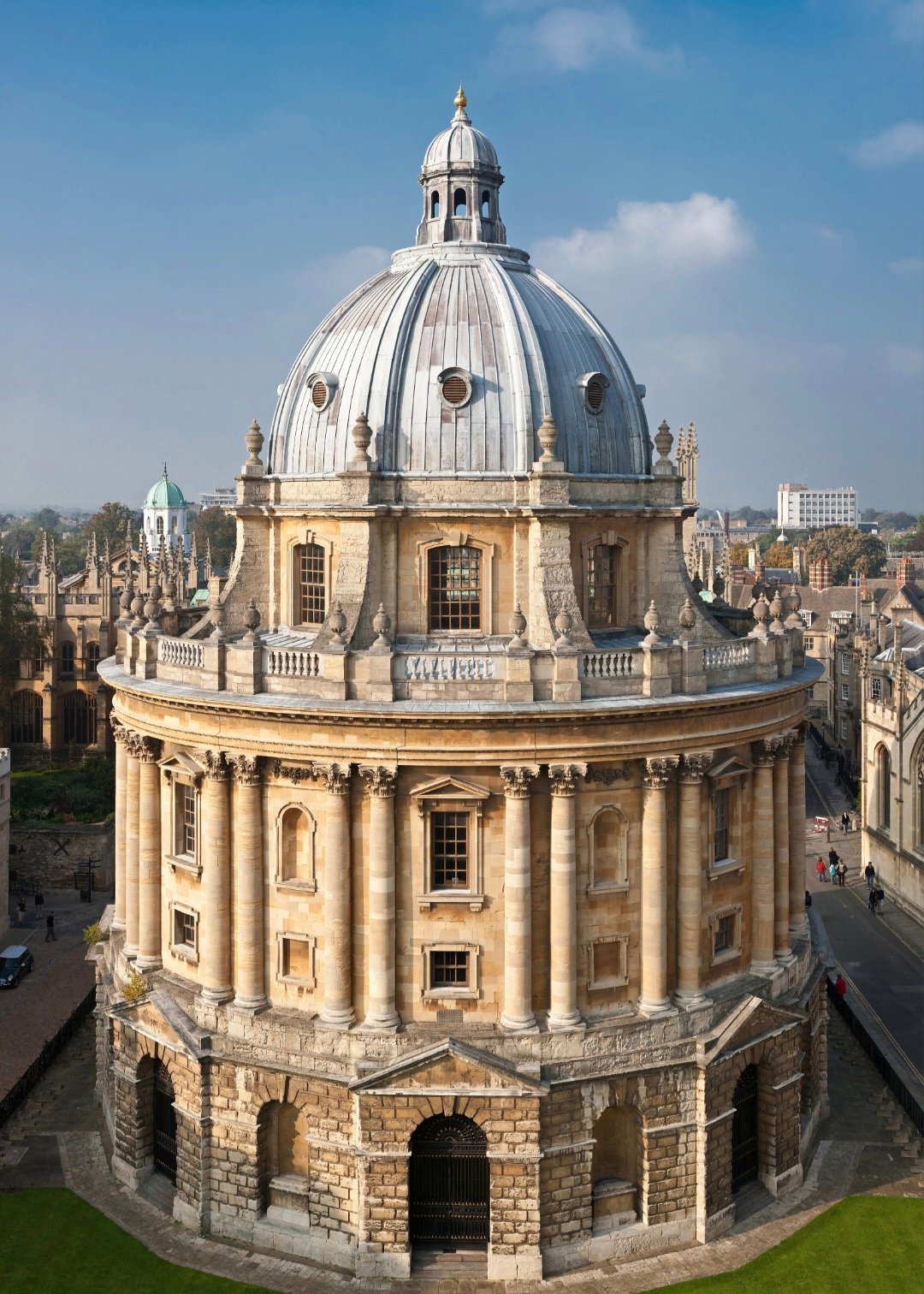
Oxford’s architecture is one of its most recognizable features.
Medieval towers, Gothic chapels, stone quadrangles, libraries and modern research buildings coexist across the city.
The architectural landscape reflects the University’s long history.
Some buildings are hundreds of years old, while others were constructed to support modern scientific research.
Oxford itself has become an international symbol of historic academic culture.
Its buildings appear frequently in literature, photography, television and film.
40. Tradition and Change
Perhaps the most interesting feature of Oxford’s history is the relationship between tradition and change.
Oxford preserves ancient ceremonies, academic gowns, formal dinners and historic buildings.
At the same time, its researchers work on cutting-edge problems in artificial intelligence, genetics, climate science, medicine and other fields.
This combination can sometimes seem contradictory.
Yet it is central to Oxford’s identity.
The University has survived for centuries precisely because it has repeatedly adapted to changing intellectual and social environments.
41. Oxford’s Governance
Oxford is an independent and self-governing institution.
Its colleges are also largely self-governing.
The University explains that the colleges operate within a federal system and that each college has its own governance structure. (Oxford University)
This means Oxford is not organized like a conventional centralized university.
Decision-making is distributed among different academic and collegiate bodies.
The arrangement is historically unusual but remains a defining characteristic of Oxford.
42. Oxford’s Financial and Institutional Structure
The independence of the colleges is also reflected financially.
Oxford states that its colleges are independent, self-governing and financially autonomous institutions. (Oxford University)
This financial independence allows individual colleges to develop their own priorities while remaining part of the wider University.
The relationship between the central University and colleges is therefore both cooperative and decentralized.
43. Oxford’s Alumni
Oxford’s alumni network extends across the world.
Former students have become scientists, writers, artists, business leaders, judges, politicians, diplomats, academics and public servants.
The University’s official history describes its global alumni community as numbering around 230,000 people. (Oxford University)
These alumni form a major part of Oxford’s international influence.
44. Oxford’s Contribution to Science and Research
Oxford’s research contribution is much broader than its traditional reputation might suggest.
Modern Oxford includes research in:
- Medicine
- Biology
- Chemistry
- Physics
- Mathematics
- Computer science
- Engineering
- Earth sciences
- Environmental research
- Economics
- Social sciences
- Humanities
- Law
- Philosophy
This diversity reflects the transformation of the University from a medieval institution into a comprehensive modern research university.
45. Oxford in the Twenty-First Century
The twenty-first century has brought new challenges.
Universities now face questions about:
- Artificial intelligence
- Climate change
- Global health
- Energy security
- Digital technology
- Inequality
- International conflict
- Biotechnology
- Ethics
- Misinformation
- Sustainable development
Oxford participates in research and public discussion surrounding many of these issues.
Its long history provides a foundation, but its future depends on continued innovation.
46. Oxford’s Role in Global Education
Modern higher education is increasingly international.
Oxford’s historical international connections have expanded dramatically.
Students and academics can collaborate across continents using digital technology.
International partnerships allow Oxford researchers to work with universities, governments, hospitals, companies and research institutions around the world.
The University’s medieval tradition of attracting international scholars has therefore developed into a modern global network.
47. The Meaning of Oxford’s Long History
What does it mean for an institution to survive for more than nine centuries?
Oxford’s history demonstrates institutional continuity.
The University has existed through radically different political and intellectual periods.
It has survived:
- Medieval political conflict
- Religious reformations
- Civil war
- Scientific revolutions
- Industrialization
- Democratic reforms
- World wars
- Social transformation
- Globalization
- Digital transformation
- The COVID-19 pandemic
Few educational institutions can demonstrate such a long continuous history.
48. Why Oxford Remains Important
Oxford remains important because its influence is not limited to one discipline.
Its graduates and researchers contribute to science, medicine, politics, literature, economics, law, philosophy and public life.
Its libraries preserve centuries of knowledge.
Its colleges create communities that connect generations of scholars.
Its research institutions address modern global problems.
And its traditions provide a sense of continuity with the intellectual history of medieval Europe.
49. Oxford’s Historical Legacy
The historical legacy of Oxford can be understood through several major themes.
Academic tradition
Oxford has maintained a strong culture of scholarship and intellectual debate.
Collegiate education
Its college system remains central to student life.
International connections
The University has attracted scholars from outside England since the medieval period.
Scientific development
Oxford has increasingly become a major centre for modern scientific and medical research.
Public influence
Its graduates have played important roles in government, literature, science and society.
Adaptation
The University has repeatedly changed while maintaining historical traditions.
50. Conclusion
The history of the University of Oxford is a story of extraordinary continuity and transformation.
Teaching was taking place at Oxford by 1096, but the University did not begin on one clearly identifiable foundation day. Instead, it developed gradually from a community of teachers and students. Its growth accelerated after 1167, when Henry II prohibited English students from attending the University of Paris. By the early thirteenth century, Oxford had developed formal university structures, and during the thirteenth century its first colleges emerged. (Oxford University)
Over the following centuries, Oxford became one of Europe’s leading centres of learning.
It experienced religious upheaval during the Reformation, became a royalist centre during the English Civil War, participated in the scientific revolution, and underwent major reforms during the nineteenth century.
The twentieth century brought perhaps the most dramatic social transformation. Women became full members of the University in 1920, and by the end of the century Oxford’s historic gender divisions had largely disappeared. (Oxford University)
At the same time, Oxford expanded its scientific and medical research capabilities.
In the twenty-first century, it remains a complex collegiate university combining ancient colleges, modern laboratories, libraries, museums, departments and international research programmes.
Oxford’s history is therefore not simply about the past.
It is a history of adaptation.
The University’s medieval scholars could not have imagined modern genetics, artificial intelligence, vaccines, space science or digital communication. Yet the institution they helped create developed an intellectual culture capable of embracing new questions.
That may be Oxford’s greatest historical achievement: the ability to preserve a nine-century intellectual tradition while continuing to create new knowledge.
Today, Oxford stands as one of the world’s most recognizable universities. Its historic buildings and traditions connect it to medieval Europe, while its research and global academic community place it firmly in the modern world.
From the first known teaching in the eleventh century to today’s international research environment, the story of Oxford is ultimately the story of an institution continually redefining what a university can be.
Key Historical Timeline
| Year | Major Event |
|---|---|
| 1096 | Evidence of teaching at Oxford |
| 1167 | Oxford develops rapidly after Henry II’s ban on English students attending Paris |
| 1188 | Gerald of Wales gives a public reading |
| c. 1190 | Emo of Friesland becomes the first known overseas student |
| 1214 | Chancellor title becomes established |
| 1231 | Masters recognized as a universitas |
| 1249–1264 | University, Balliol and Merton Colleges established |
| 1355 | Edward III recognizes Oxford’s contribution to learning and the state |
| 1860 | Famous Huxley–Wilberforce evolution debate |
| 1878 | Academic halls for women established |
| 1920 | Women become full members of the University |
| 1986 | All historic male colleges had changed statutes to admit women |
| 2008 | Green Templeton College created through merger |
| 2019 | Reuben College founded |
| 2020–22 | Oxford plays a major role in the global COVID-19 response |
Oxford’s official history emphasizes that the institution has more than nine centuries of continuous existence, while its current structure combines the central University with colleges and societies. (Oxford University)
The history of Oxford therefore remains unfinished. Every new student, researcher, discovery and debate adds another chapter to one of the longest educational stories in the English-speaking world.