Introduction
The University of Sydney is one of Australia’s most respected and historically important universities. Founded in 1850, it was Australia’s first university and has grown into a globally recognized institution known for academic excellence, research, innovation, professional education, and a diverse student community. Located in Sydney, New South Wales, the university combines a long academic tradition with modern teaching, advanced research facilities, and a strong international outlook.
Often referred to as USYD or simply Sydney University, the institution attracts students from Australia and many countries around the world. Its broad range of undergraduate, postgraduate, research, and professional programs allows students to study subjects ranging from medicine, engineering, law, business, and computer science to arts, education, architecture, agriculture, and the sciences.
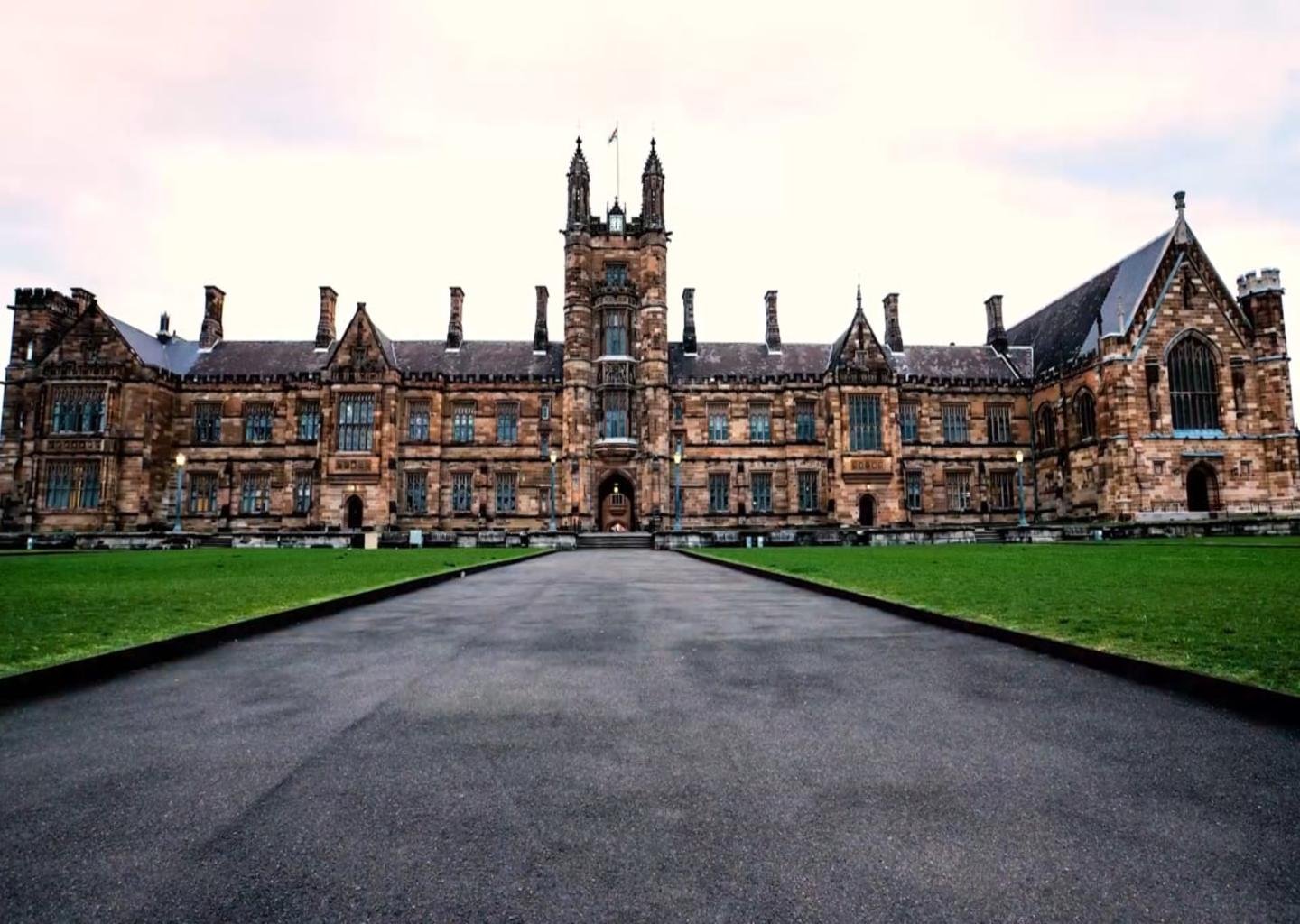
The University of Sydney is also famous for its historic Camperdown and Darlington campus, distinctive sandstone architecture, libraries, museums, research centers, student societies, and vibrant campus environment. Over more than 175 years, the university has played an important role in Australian education, science, medicine, public service, business, culture, and research.
This comprehensive guide explores the University of Sydney’s history, academic programs, admissions, campus life, research, international opportunities, scholarships, facilities, student experience, career opportunities, and frequently asked questions.
1. Overview of the University of Sydney
The University of Sydney was established in 1850 and officially opened its doors to students in 1852. It was created during an important period in Australia’s development, when there was growing recognition of the need for a higher education institution capable of preparing graduates for professional and public life.
Today, the university is a comprehensive research university offering hundreds of study options. It welcomes students from different backgrounds and countries and maintains partnerships with universities, research organizations, governments, businesses, and professional institutions around the world.
Key facts
- University: The University of Sydney
- Common abbreviation: USYD
- Founded: 1850
- Location: Sydney, New South Wales, Australia
- Type: Public research university
- Academic structure: Multiple faculties and schools
- Study levels: Undergraduate, postgraduate and research
- Campus: Primarily Camperdown/Darlington, with additional facilities and campuses
- Student community: Australian and international students
- Academic focus: Education, research, innovation and professional development
The university’s long history is one of its strongest characteristics. Its heritage buildings exist alongside modern laboratories, teaching spaces, libraries, technology facilities, health facilities, and student centers.
2. History of the University of Sydney
The Foundation in 1850
The University of Sydney was founded in 1850 through an Act of the Parliament of New South Wales. At the time, Sydney was experiencing major social and economic development, and leaders increasingly understood that a modern society required advanced education.
The establishment of the university represented an important milestone in Australian history. Rather than requiring students to travel overseas for university education, Australia could develop its own institution for higher learning.
The university was modeled partly on established British universities, but it developed its own identity in response to Australian society.
The First Students
The University of Sydney officially began teaching in 1852. Its early academic programs focused strongly on subjects considered important for professional and civic life.
In its earliest years, the university operated on a much smaller scale than it does today. The student population was limited, facilities were relatively modest, and university education was accessible mainly to a small section of society.
Nevertheless, the institution gradually expanded its academic offerings and influence.
The Growth of Higher Education
During the late nineteenth and early twentieth centuries, the University of Sydney became increasingly important in Australian education. It developed faculties and professional programs in areas such as law, medicine, science, engineering, arts, and other disciplines.
As Sydney expanded, the university also expanded.
The institution became increasingly involved in scientific research and professional education. Graduates entered important careers in government, law, medicine, engineering, education, business, science, and public administration.
3. The University of Sydney and Australian Society
The university has played a significant role in the intellectual and cultural development of Australia.
Its graduates and academics have contributed to medicine, science, literature, politics, law, education, engineering, business, journalism, public administration, and many other fields.
Universities are not only places where students attend lectures. They are also institutions where new ideas are developed and debated. Throughout its history, the University of Sydney has provided an environment for academic discussion, research, social change, and innovation.
The university has also evolved with Australian society. Its student population became increasingly diverse over time, while its academic programs expanded to reflect new industries and areas of knowledge.
4. The University of Sydney Campus
One of the most recognizable features of the University of Sydney is its historic campus.
The Camperdown and Darlington campus is particularly famous for its sandstone buildings and distinctive architectural character.
Historic Architecture
Many parts of the campus reflect nineteenth-century architectural traditions. The sandstone buildings create an environment that feels very different from a modern corporate campus.
The Quadrangle is one of the university’s most recognizable locations. Its Gothic Revival architecture has become closely associated with the University of Sydney.
The historic buildings provide an impressive backdrop for modern university life.
Modern Facilities
Although the university has a historic appearance, it is not limited to traditional facilities.
Modern developments include:
- Research laboratories
- Computer facilities
- Libraries
- Lecture theatres
- Student learning spaces
- Medical facilities
- Engineering laboratories
- Science facilities
- Collaborative study areas
- Sports facilities
- Cafes and dining spaces
- Student support centers
This combination of historic architecture and modern infrastructure is one of the distinctive characteristics of the university.
5. Academic Structure
The University of Sydney offers education across a wide range of disciplines.
Its academic structure includes faculties, schools, departments, research institutes, and specialized centers.
Students can select from traditional academic subjects as well as interdisciplinary programs.
Major areas of study include:
- Arts and humanities
- Business
- Economics
- Engineering
- Computer science
- Medicine
- Health sciences
- Dentistry
- Law
- Architecture
- Design
- Education
- Science
- Agriculture
- Veterinary science
- Social sciences
- Nursing
- Pharmacy
- Environmental studies
The wide academic selection makes the university attractive to students with different interests and career goals.
6. Undergraduate Programs
Undergraduate study at the University of Sydney provides students with opportunities to develop academic knowledge and professional skills.
Depending on the program, students may complete a bachelor’s degree, combined degree, or other specialized undergraduate qualification.
Many courses allow students to choose majors, minors, electives, or areas of specialization.
Arts and Humanities
Students interested in culture, history, languages, philosophy, literature, politics, media, and society can explore numerous programs in the humanities and social sciences.
These subjects can help students develop:
- Critical thinking
- Communication
- Research
- Writing
- Analysis
- Cultural understanding
Business and Economics
Business programs can prepare students for careers in:
- Finance
- Accounting
- Marketing
- Management
- Economics
- Entrepreneurship
- Banking
- Consulting
The university’s location in Sydney also provides access to one of Australia’s major business and financial centers.
Engineering
Engineering is another important area of study.
Students can explore disciplines such as:
- Civil engineering
- Mechanical engineering
- Electrical engineering
- Biomedical engineering
- Chemical engineering
- Software and technology-related fields
Engineering programs often combine theoretical education with practical and project-based learning.
Computer Science
Technology has become one of the most important areas of modern employment, and computer science education is increasingly valuable.
Students can study areas such as:
- Programming
- Artificial intelligence
- Data science
- Cybersecurity
- Software development
- Algorithms
- Computer systems
- Machine learning
7. Medicine and Health Sciences
The University of Sydney has a long history in medical education.
Health-related education at the university includes areas such as:
- Medicine
- Nursing
- Dentistry
- Pharmacy
- Public health
- Physiotherapy
- Allied health
- Medical research
The university’s connection with hospitals and health organizations provides opportunities for students and researchers to engage with practical healthcare environments.
Medical education requires significant commitment, and admission requirements can be highly competitive depending on the program.
8. Law at the University of Sydney
Law is one of the university’s well-known academic areas.
Students interested in legal careers can study foundational legal concepts and develop skills in:
- Legal research
- Legal writing
- Argumentation
- Critical analysis
- Ethics
- Public policy
Graduates may pursue careers in private legal practice, government, corporations, international organizations, public service, academia, and other professional areas.
9. Science and Research
Scientific research is central to the identity of the University of Sydney.
Researchers work across areas such as:
- Physics
- Chemistry
- Biology
- Environmental science
- Medical science
- Neuroscience
- Data science
- Climate research
- Agriculture
- Materials science
University research can involve collaboration between different disciplines.
For example, solving environmental problems may require expertise in biology, engineering, economics, computer science, and public policy.
This interdisciplinary approach is increasingly important in modern research.
10. Engineering and Innovation
Engineering research at the University of Sydney contributes to areas involving technology, infrastructure, health, energy, and advanced manufacturing.
Innovation is increasingly connected to entrepreneurship.
Students may have opportunities to work on projects involving:
- Robotics
- Artificial intelligence
- Biomedical technologies
- Sustainable engineering
- Digital systems
- Renewable energy
- Smart infrastructure
The combination of education, research, and industry engagement can help students understand how theoretical knowledge is transformed into practical solutions.
11. Research at the University of Sydney
The University of Sydney is a major research institution.
Research is conducted by academic staff, research students, postdoctoral researchers, research centers, and interdisciplinary teams.
Research projects can address some of the world’s most important challenges.
These include:
Health
Researchers investigate diseases, healthcare systems, medical treatments, public health, and human wellbeing.
Climate and Environment
Environmental research explores climate change, ecosystems, biodiversity, sustainability, and environmental management.
Technology
Technology research includes artificial intelligence, computing, robotics, data science, and digital innovation.
Society
Researchers also investigate social inequality, economics, education, politics, culture, and human behavior.
Future Energy
Research into sustainable energy aims to support cleaner and more efficient energy systems.
12. International Students
The University of Sydney attracts students from around the world.
International students contribute to the diversity of the university community and bring different languages, cultures, experiences, and perspectives to campus.
For international applicants, the university provides information about:
- Admission requirements
- English-language requirements
- Student visas
- Tuition fees
- Scholarships
- Accommodation
- Orientation
- Student support
International students should always check the university’s official admissions information because requirements can vary by country, qualification, and degree.
13. Admission Requirements
Admission requirements depend on the course and the applicant’s educational background.
Students may need to provide academic qualifications and demonstrate that they meet specific subject prerequisites.
International applicants may need:
- Recognized secondary or tertiary qualifications
- Academic transcripts
- English-language evidence where required
- Passport information
- Additional documents for particular programs
Some professional programs may have additional selection criteria.
Because admission requirements change, prospective students should consult the official University of Sydney website before applying.
14. English Language Requirements
For many international students, English proficiency is an important part of admission.
Depending on the course, applicants may be asked to provide evidence through an accepted English-language test or qualification.
Possible tests can include recognized examinations such as:
- IELTS
- TOEFL
- PTE Academic
- Other accepted qualifications
The required score can vary considerably between courses.
Students should therefore check the specific requirements for their intended degree rather than relying on a general university-wide assumption.
15. Tuition Fees
University costs depend on several factors.
These include:
- Degree type
- Course
- Domestic or international status
- Study load
- Program duration
- Additional academic expenses
International students generally pay international tuition fees, while eligible domestic students may have access to Australian government-supported arrangements.
Students should also consider living expenses when preparing a university budget.
16. Scholarships
Scholarships can help students manage the cost of higher education.
The University of Sydney offers various scholarship opportunities for eligible students.
Scholarships may be based on:
- Academic achievement
- Leadership
- Financial circumstances
- Research potential
- Specific study areas
- International student eligibility
- Community involvement
Scholarship conditions differ, so students should carefully review eligibility, deadlines, required documents, and funding conditions.
17. Student Accommodation
Finding suitable accommodation is an important part of studying in Sydney.
Students may consider:
- University residences
- Shared housing
- Private rentals
- Homestays
- Purpose-built student accommodation
The right option depends on budget, location, lifestyle, and personal preferences.
Sydney is a major international city, so students should plan their accommodation early.
18. Cost of Living in Sydney
Sydney is one of Australia’s major metropolitan cities and can be relatively expensive compared with some other Australian locations.
Students should budget for:
- Rent
- Food
- Transportation
- Study materials
- Mobile phone
- Internet
- Entertainment
- Personal expenses
- Health and insurance-related costs where applicable
A realistic financial plan can make university life much easier.
19. Student Life
Student life at the University of Sydney extends beyond classrooms.
Students can participate in:
- Clubs
- Societies
- Sports
- Academic organizations
- Cultural groups
- Volunteer programs
- Leadership activities
- Student events
- Career activities
Joining student organizations can help students build friendships and professional networks.
20. Clubs and Societies
There are many opportunities for students to connect with people who share their interests.
Clubs can focus on:
- Academic subjects
- Sports
- Culture
- Languages
- Careers
- Technology
- Arts
- Music
- Entrepreneurship
- Social activities
For international students, cultural societies can be especially useful for building a sense of community.
21. Sports and Recreation
University life is not only about studying.
Sports and recreational activities can help students maintain a healthy lifestyle and meet other students.
Activities may include team sports, fitness programs, recreational clubs, and competitive university sports.
Participating in sport can also improve teamwork, communication, leadership, and time-management skills.
22. Libraries and Learning Resources
Libraries are an essential part of university education.
Students need access to:
- Academic books
- Journals
- Research databases
- Digital resources
- Study areas
- Group work facilities
- Technology
- Academic support
The University of Sydney’s library system supports teaching, learning, and research across many disciplines.
23. Technology and Digital Learning
Modern university education increasingly depends on technology.
Students may use online learning platforms, digital libraries, academic databases, collaboration tools, and specialized software.
Technology can allow students to access course materials, communicate with instructors, submit assignments, participate in online learning, and conduct research.
24. Career Development
A major reason students attend university is to prepare for their future careers.
Career development can include:
- Career counseling
- Resume support
- Interview preparation
- Employer events
- Internships
- Networking
- Industry projects
- Career fairs
Students can improve their employment prospects by combining academic performance with practical experience.
25. University of Sydney and Industry
Sydney is home to major businesses, technology companies, financial institutions, hospitals, professional organizations, government bodies, and cultural institutions.
This location provides opportunities for university-industry collaboration.
Students may benefit from:
- Internships
- Professional placements
- Industry projects
- Guest lectures
- Networking events
- Research partnerships
Industry experience can help students understand workplace expectations.
26. Notable Alumni
The University of Sydney has educated many notable people throughout its history.
Its alumni have included individuals associated with:
- Politics
- Medicine
- Science
- Literature
- Business
- Law
- Public service
- Engineering
- Academia
- Arts
The university’s alumni network reflects its long history and broad academic influence.
27. Why Study at the University of Sydney?
There are many reasons students consider the University of Sydney.
Historic reputation
As Australia’s first university, the institution has a long academic tradition.
Wide range of programs
Students can choose from many disciplines and career pathways.
Research opportunities
Research is a major part of university life.
International community
Students can interact with people from many countries.
Sydney location
The university is located in one of Australia’s most internationally connected cities.
Campus environment
Historic architecture combines with modern academic facilities.
Career opportunities
Students can access professional development and industry engagement opportunities.
28. Challenges Students Should Consider
Although the University of Sydney offers many advantages, prospective students should also consider potential challenges.
Competitive admission
Some programs can be highly competitive.
Cost of living
Sydney can be expensive, particularly for accommodation.
Academic workload
University-level study requires strong time management and independent learning.
Adjustment to a new country
International students may need time to adapt to Australian academic culture, language, transportation, weather, and social life.
Planning ahead can make these challenges easier to manage.
29. How to Apply to the University of Sydney
The application process depends on the applicant and course.
A typical process may involve:
Step 1: Choose a course
Research degrees carefully and compare subjects, duration, entry requirements, career outcomes, and fees.
Step 2: Check eligibility
Confirm that your academic qualifications meet the requirements.
Step 3: Check English requirements
International applicants should confirm whether English-language evidence is required.
Step 4: Prepare documents
Prepare academic records and any additional documents required for the course.
Step 5: Submit the application
Follow the university’s current application process.
Step 6: Wait for the outcome
The university will assess the application.
Step 7: Accept the offer
If admitted, follow the instructions in the offer.
Step 8: Prepare for arrival
International students should complete visa, accommodation, insurance, travel, and orientation arrangements where applicable.
30. How to Prepare for University of Sydney Study
Preparation can significantly improve the student experience.
Students should develop:
- Strong English communication
- Research skills
- Academic writing
- Time management
- Digital skills
- Independent learning
- Critical thinking
It is also helpful to research Sydney’s transportation system, accommodation options, living costs, and student support services before arrival.
31. Academic Culture
University study is different from school education.
Students are expected to become more independent.
This can include:
- Reading beyond lectures
- Conducting research
- Completing assignments independently
- Participating in tutorials
- Asking questions
- Managing deadlines
- Referencing sources correctly
Developing good academic habits early can make a significant difference.
32. Diversity and Inclusion
Modern universities serve students from many cultural and social backgrounds.
The University of Sydney’s international community creates opportunities for students to learn from people with different experiences.
A diverse academic environment can encourage:
- Cross-cultural communication
- Collaboration
- Understanding
- Creativity
- Global perspectives
These skills are valuable in international workplaces.
33. Sustainability
Universities have an important role in addressing environmental challenges.
Sustainability can involve:
- Environmental research
- Sustainable campus practices
- Renewable energy research
- Biodiversity
- Climate studies
- Sustainable engineering
- Responsible resource management
Students interested in environmental issues can explore academic programs and research opportunities connected to sustainability.
34. The University of Sydney’s Global Role
The University of Sydney is not only an Australian institution. It operates within an international academic network.
Its students, researchers, academics, alumni, and partners contribute to global education and research.
International collaboration allows researchers to share knowledge and work on problems that cannot easily be solved by one country alone.
35. Future of the University of Sydney
The future of the University of Sydney will likely be influenced by several major developments.
These include:
- Artificial intelligence
- Digital education
- Medical innovation
- Climate change
- Renewable energy
- Biotechnology
- Data science
- Global health
- Advanced engineering
- Interdisciplinary research
Universities must continue adapting as technology and society change.
The University of Sydney’s combination of historical tradition and modern research provides a strong foundation for future development.
36. SEO Guide: University of Sydney
For readers searching online, several keywords are commonly associated with the university.
Primary SEO keywords
- University of Sydney
- University of Sydney Australia
- University of Sydney history
- University of Sydney courses
- University of Sydney admission
- University of Sydney ranking
- University of Sydney scholarships
- University of Sydney international students
- University of Sydney campus
- University of Sydney tuition fees
Long-tail keywords
- How to apply to the University of Sydney
- University of Sydney admission requirements for international students
- Best courses at the University of Sydney
- University of Sydney scholarships for international students
- University of Sydney student life
- University of Sydney campus facilities
- Is the University of Sydney a good university?
- Why study at the University of Sydney?
Using informative content around these topics can help readers find useful information while improving the article’s search visibility.
37. Tips for International Students
International students considering the University of Sydney should start planning early.
First, research your preferred course carefully.
Second, check academic and English-language requirements.
Third, calculate tuition and living expenses.
Fourth, investigate scholarships.
Fifth, research accommodation.
Sixth, understand visa requirements through official Australian government resources.
Finally, prepare for academic and cultural differences.
Good preparation can make the transition much smoother.
38. Is the University of Sydney Worth It?
For many students, the University of Sydney can be an excellent choice because it combines a long academic history, broad course selection, research opportunities, international exposure, and a major-city location.
However, the best university depends on the individual student.
Students should consider:
- Their intended subject
- Career goals
- Budget
- Academic qualifications
- Preferred lifestyle
- Location
- Research interests
- Scholarship opportunities
A university should be selected based on personal goals rather than reputation alone.
39. Frequently Asked Questions About the University of Sydney
1. When was the University of Sydney founded?
The University of Sydney was founded in 1850 and became Australia’s first university.
2. Where is the University of Sydney located?
The main Camperdown and Darlington campus is located in Sydney, New South Wales, Australia.
3. Is the University of Sydney a public university?
Yes. The University of Sydney is a public research university.
4. Is the University of Sydney good for international students?
Yes. The university has a large international student community and offers many programs across different disciplines.
5. What can I study at the University of Sydney?
Students can study areas including business, engineering, medicine, law, science, computer science, arts, architecture, education, health, agriculture, and many other disciplines.
6. Does the University of Sydney offer scholarships?
Yes. There are different scholarships and funding opportunities, although eligibility and conditions vary.
7. Is admission to the University of Sydney difficult?
Admission difficulty depends on the course and applicant qualifications. Some programs are considerably more competitive than others.
8. Does the University of Sydney require IELTS?
Some applicants may need to demonstrate English proficiency. Requirements depend on the course and the applicant’s previous education.
9. How much does it cost to study at the University of Sydney?
Costs vary according to the degree, student status, study load, and other factors. Students should check the current official fee information for their chosen course.
10. Is Sydney expensive for students?
Sydney can have a relatively high cost of living, particularly for housing. Students should prepare a realistic budget before moving.
11. Does the University of Sydney have accommodation?
Students have access to various accommodation options, including university-related residences and private housing options.
12. What is the University of Sydney famous for?
The university is particularly known for its history as Australia’s first university, its research, broad academic programs, historic campus, and contributions to Australian society.
13. Does the University of Sydney offer medicine?
Yes. The university has extensive medical and health-related education and research.
14. Does the university offer engineering?
Yes. Engineering is one of the major areas of study and research.
15. Can international students work while studying?
International students may have work rights depending on their visa conditions. Students should always check current Australian immigration rules before making employment plans.
16. What is student life like?
Student life includes academic study, clubs, societies, sports, cultural activities, social events, volunteering, and career development.
17. Is the University of Sydney good for research?
Yes. Research is a major part of the university’s mission, with projects across health, science, engineering, technology, environment, society, and other areas.
18. How can I apply?
Applicants should select a course, check its eligibility requirements, prepare required documents, and follow the current application process provided by the University of Sydney.
19. Is the University of Sydney Australia’s oldest university?
It is Australia’s first university, founded in 1850.
20. Why should I choose the University of Sydney?
Students may choose it because of its long history, wide academic selection, research opportunities, international community, Sydney location, and professional development opportunities.
40. Final Thoughts
The University of Sydney represents an important part of Australia’s educational history. Founded in 1850, it began as the country’s first university and developed over more than a century and a half into a major international research and teaching institution.
Its historic campus, broad range of academic programs, research strengths, international community, and location in Sydney make it an attractive destination for students from Australia and around the world.
For prospective students, choosing the University of Sydney should involve more than simply looking at its reputation. Students should carefully compare courses, entry requirements, tuition fees, scholarships, accommodation, career opportunities, and personal goals.
Whether a student is interested in medicine, engineering, business, computer science, law, science, arts, education, architecture, or another field, the University of Sydney offers a broad academic environment in which students can develop knowledge and professional skills.
Its history provides a strong foundation, while its research and innovation activities connect the university to the future. As global challenges continue to change education, technology, healthcare, climate research, and employment, institutions such as the University of Sydney have an important role in preparing the next generation of graduates and researchers.
For students looking for a university in Australia with a long history, diverse academic opportunities, a major-city environment, and a strong research culture, the University of Sydney remains an institution worth considering.
Important note: Admission requirements, tuition fees, scholarships, course availability, rankings, visa rules, and other policies can change. Prospective students should verify current information through the official University of Sydney and Australian government websites before applying.
Conclusion
The University of Sydney is much more than a historic Australian university. It is a large academic community connecting education, research, innovation, culture, professional development, and international collaboration.
From its foundation in 1850 to its modern role in global higher education, the university has continuously evolved. Its historic buildings represent its past, while its laboratories, technology, research centers, classrooms, and students represent its future.
For students planning an Australian education, understanding the University of Sydney’s history, courses, admissions, costs, campus, scholarships, and student life is an important first step. With careful planning and the right academic preparation, studying at this renowned institution can become a valuable part of a student’s educational and professional journey.