Introduction
The University of Toronto (U of T) is one of Canada’s most prestigious and internationally recognized universities. Located in Toronto, Ontario, the university has developed a remarkable reputation for academic excellence, groundbreaking research, innovation, diversity, and global impact. Founded in 1827, the University of Toronto has grown from a small colonial-era institution into a comprehensive research university with a major influence on Canadian education and international scholarship.
For students searching for a world-class university in Canada, the University of Toronto is often considered one of the strongest choices. Its academic programs cover almost every major field, including engineering, medicine, computer science, business, humanities, social sciences, life sciences, mathematics, law, architecture, education, and public policy.
The university is also known for its extensive research activity. Researchers associated with U of T have contributed to important developments in medicine, artificial intelligence, computer science, engineering, astronomy, economics, psychology, biotechnology, and many other disciplines.
This comprehensive guide explores the University of Toronto history, campuses, academic programs, admissions, tuition, scholarships, student life, research, rankings, notable alumni, international opportunities, advantages, challenges, and frequently asked questions.
University of Toronto at a Glance
The University of Toronto is a public research university based in Toronto, Ontario, Canada. It operates across three major campuses:
- St. George Campus
- Mississauga Campus
- Scarborough Campus
The St. George campus is located in the heart of downtown Toronto and is the university’s historic main campus. The Mississauga and Scarborough campuses provide additional academic programs, research opportunities, and student communities.
The university offers undergraduate, graduate, professional, and doctoral education across a very large number of disciplines.
Its location is another major advantage. Toronto is Canada’s largest city and a major center for finance, technology, healthcare, culture, media, business, and international organizations. This creates opportunities for students to connect their education with real-world professional experiences.
History of the University of Toronto
Early Beginnings
The history of the University of Toronto dates back to the early nineteenth century. In 1827, King’s College received a royal charter establishing an institution of higher education in what was then Upper Canada.
The university’s early development was strongly connected to religious and political institutions of the period. Over time, however, the institution evolved toward a broader public and secular educational mission.
In 1849, King’s College became the University of Toronto. This transformation represented an important stage in the development of higher education in Canada.
During the nineteenth century, the university expanded its academic activities and developed relationships with colleges and institutions that later became an important part of its distinctive collegiate structure.
Development During the Nineteenth Century
The University of Toronto experienced considerable growth throughout the nineteenth century. New academic disciplines were introduced, faculty numbers increased, and the institution became increasingly important to Canadian intellectual life.
Several historic colleges became affiliated with the university. These included institutions with different religious and cultural traditions.
The collegiate system eventually became one of the defining features of the University of Toronto. Students could belong to individual colleges while studying within the wider university.
This structure helped create smaller communities inside a large research university.
University of Toronto in the Twentieth Century
The twentieth century brought enormous changes to the university.
As Canada became increasingly industrialized and economically developed, demand for advanced education and scientific research increased. The University of Toronto responded by expanding its academic departments, laboratories, professional schools, libraries, and research programs.
The university became particularly influential in medicine and scientific research.
During this period, researchers associated with the University of Toronto contributed to discoveries and developments that had international significance.
Major Scientific and Medical Contributions
The University of Toronto has a particularly strong history in medicine and biomedical research.
One of the most famous achievements associated with researchers at the university is the development of insulin.
In the early 1920s, researchers Frederick Banting, Charles Best, J. J. R. Macleod, and James Collip were involved in the research that led to the discovery and development of insulin as a treatment for diabetes.
This achievement transformed the treatment of diabetes and became one of the most important medical breakthroughs of the twentieth century.
The university has continued to build on this tradition through medical research, biotechnology, neuroscience, public health, pharmacology, and related fields.
The University of Toronto Today
Today, the University of Toronto is a major international research university.
It attracts students and scholars from Canada and countries around the world. Its academic community includes researchers working on some of the most important scientific, technological, social, and cultural questions of the modern era.
The university’s scale allows it to provide a very broad range of programs while maintaining highly specialized research communities.
Its academic environment combines traditional disciplines with emerging areas such as artificial intelligence, machine learning, data science, computational biology, cybersecurity, sustainability, and advanced materials.
University of Toronto Campuses
1. St. George Campus
The St. George campus is the university’s historic downtown Toronto campus.
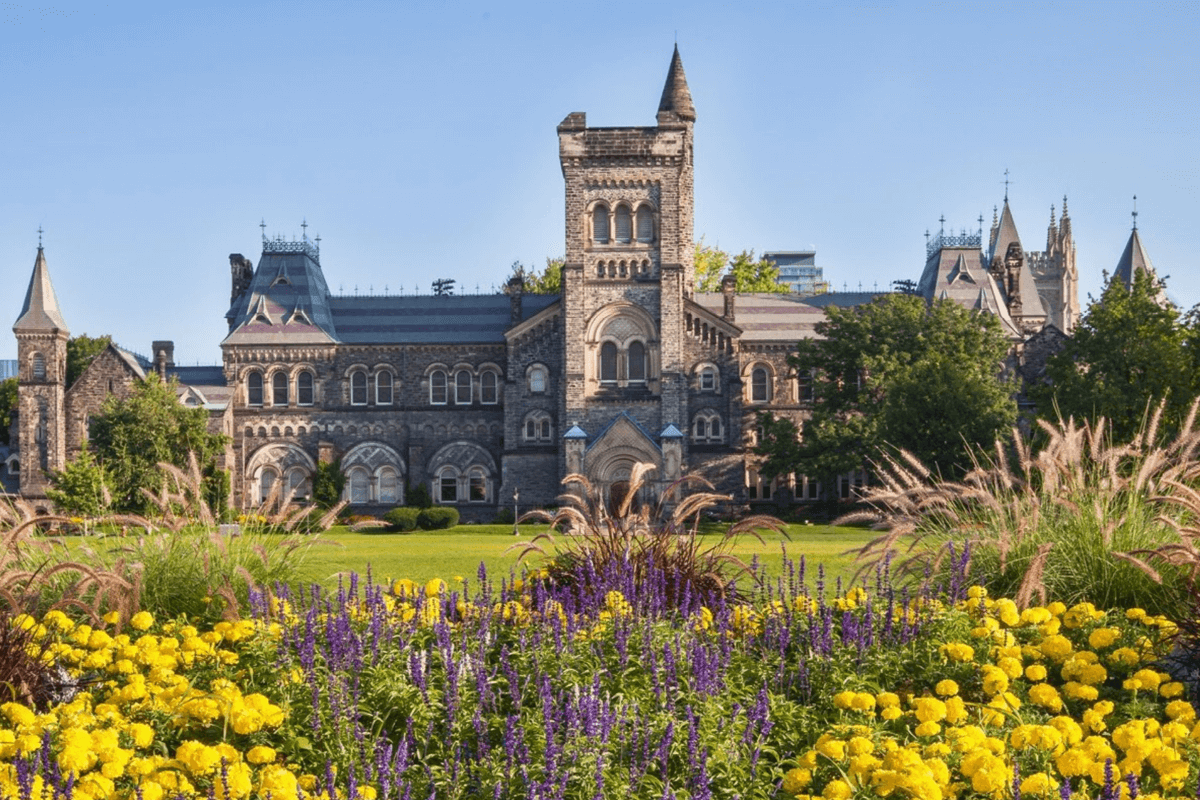
It is surrounded by some of Toronto’s most important cultural and educational institutions. The campus includes historic buildings, modern research facilities, libraries, student residences, laboratories, classrooms, athletic facilities, and public spaces.
The campus atmosphere combines historic architecture with modern university infrastructure.
Students studying at St. George have access to a large academic community and numerous research and extracurricular opportunities.
2. University of Toronto Mississauga
The Mississauga campus is located west of downtown Toronto.
It offers a broad selection of undergraduate and graduate programs and is known for its green campus environment and research activities.
The campus has developed substantially since its establishment and provides students with modern facilities while remaining connected to the wider University of Toronto system.
3. University of Toronto Scarborough
The Scarborough campus is located in the eastern part of Toronto.
It offers undergraduate and graduate education and emphasizes experiential learning, research, community engagement, and interdisciplinary education.
Its location gives students access to the diverse communities of Scarborough and the broader Greater Toronto Area.
Academic Structure
The University of Toronto has a highly diversified academic structure.
Students can choose from many areas of study, including:
- Arts and humanities
- Social sciences
- Life sciences
- Physical sciences
- Engineering
- Computer science
- Mathematics
- Business
- Commerce
- Medicine
- Nursing
- Pharmacy
- Law
- Education
- Architecture
- Public health
- Environmental studies
- Information studies
- Music
- Public policy
The university also encourages interdisciplinary research and education.
This is particularly valuable for students interested in subjects that cross traditional academic boundaries.
University of Toronto Programs
Computer Science
Computer science is one of the university’s most popular and internationally recognized areas.
Students can study subjects such as:
- Artificial intelligence
- Machine learning
- Software engineering
- Computer systems
- Algorithms
- Data science
- Human-computer interaction
- Computer graphics
- Cybersecurity
- Computational theory
Toronto’s technology ecosystem also provides opportunities for students interested in startups, software companies, research laboratories, and technology careers.
Engineering at the University of Toronto
The Faculty of Applied Science and Engineering is another major part of the university.
Engineering students can pursue areas including:
- Mechanical engineering
- Electrical engineering
- Civil engineering
- Chemical engineering
- Computer engineering
- Industrial engineering
- Materials engineering
- Biomedical engineering
- Aerospace-related research
Engineering education at U of T combines theoretical knowledge, laboratory experience, design projects, and research.
Medicine and Health Sciences
The University of Toronto has a long and distinguished history in medicine.
Its medical and health sciences community includes researchers, clinicians, educators, and students.
Research areas include:
- Cancer research
- Neuroscience
- Cardiovascular science
- Genetics
- Immunology
- Public health
- Biomedical engineering
- Infectious diseases
- Mental health research
- Regenerative medicine
The university’s connection with major Toronto hospitals strengthens its medical education and research environment.
Business and Management
Students interested in business can explore undergraduate and graduate opportunities through the university’s business-related programs.
The Rotman School of Management is particularly well known for graduate business education.
Students can study areas such as:
- Finance
- Marketing
- Strategy
- Entrepreneurship
- Accounting
- Business analytics
- Management
- Economics
Toronto’s position as a major financial center provides an attractive environment for students interested in business careers.
Humanities and Social Sciences
The University of Toronto has extensive programs in humanities and social sciences.
Students can study:
- History
- Philosophy
- Political science
- Sociology
- Psychology
- Economics
- Anthropology
- Languages
- Literature
- Religious studies
- International relations
- Communication
These disciplines help students develop research, writing, critical thinking, communication, and analytical skills.
Research at the University of Toronto
Research is central to the identity of the University of Toronto.
The university operates numerous research centers, institutes, laboratories, and specialized facilities.
Researchers work across disciplines and frequently collaborate with hospitals, government agencies, companies, nonprofit organizations, and international institutions.
Major research areas include:
Artificial Intelligence
Toronto has become an important global center for artificial intelligence research.
Researchers associated with the university have made significant contributions to machine learning and deep learning.
Medicine
Medical research remains one of the university’s strongest areas.
Climate and Sustainability
Researchers investigate climate change, renewable energy, environmental systems, biodiversity, and sustainable development.
Space Science
The university also supports research related to astronomy, astrophysics, planetary science, and space technology.
Social Research
Researchers examine social inequality, migration, economics, politics, education, and public policy.
University of Toronto and Artificial Intelligence
The University of Toronto has played a particularly important role in the development of modern machine learning.
Geoffrey Hinton, a prominent computer scientist and researcher associated with the University of Toronto, became one of the most influential figures in the development of neural-network-based artificial intelligence.
His research helped advance techniques that later became important to modern deep learning.
The university’s broader Toronto research ecosystem has helped make the city an important location for artificial intelligence research and technology.
Admissions to the University of Toronto
Admission requirements vary according to the program, campus, applicant background, and level of study.
For undergraduate applicants, the university generally evaluates academic preparation and program-specific requirements.
International applicants may need to provide:
- Academic transcripts
- Proof of secondary education
- English-language proficiency where required
- Program-specific prerequisites
- Application information
- Additional documents when requested
Graduate applicants typically need an appropriate undergraduate degree and may have additional requirements depending on the department.
Some programs can be highly competitive, meaning that meeting minimum requirements does not necessarily guarantee admission.
University of Toronto Acceptance and Competition
The University of Toronto receives applications from students worldwide.
Competition can be particularly strong for programs such as:
- Computer science
- Engineering
- Business
- Life sciences
- Management
- Certain specialized programs
Applicants should therefore focus on strong academic preparation and carefully review the requirements of their specific program.
International Students at U of T
The University of Toronto has a large international student community.
Students come from countries across Asia, Europe, Africa, North America, South America, the Middle East, and other regions.
For international students, studying at U of T provides an opportunity to experience Canadian education while living in one of the world’s most multicultural cities.
Toronto’s diversity can make it easier for international students to find cultural communities, student organizations, restaurants, events, and support networks.
Tuition and Cost of Studying
The cost of attending the University of Toronto depends on several factors.
These include:
- Program
- Campus
- Degree level
- Domestic or international student status
- Course load
- Housing
- Lifestyle expenses
International tuition can be significantly higher than domestic tuition.
Students should always check the university’s current official fee information before making financial decisions because tuition and other fees can change.
In addition to tuition, students should budget for:
- Housing
- Food
- Transportation
- Books
- Health-related expenses
- Personal expenses
- Study materials
Toronto is a major metropolitan city, so living costs can be substantial.
Scholarships and Financial Aid
The University of Toronto offers various scholarships, awards, grants, and financial support opportunities.
Some awards are based on academic achievement, while others may consider financial need, leadership, extracurricular involvement, or specific areas of study.
International students may also be eligible for certain scholarships depending on their academic background and program.
One well-known scholarship opportunity is the Lester B. Pearson International Scholarship, which is aimed at outstanding international students entering undergraduate studies.
Students should research scholarship deadlines early because some major awards require separate nomination or application processes.
Student Life at the University of Toronto
Student life at U of T is extremely diverse.
Students can participate in hundreds of clubs, organizations, activities, and events.
Popular areas include:
- Sports
- Student government
- Academic societies
- Cultural clubs
- Entrepreneurship
- Volunteer organizations
- Arts
- Music
- Debate
- Technology
- Community service
Because the university is so large, students can usually find communities connected to their interests.
Libraries and Learning Resources
The University of Toronto has an extensive library system.
Students have access to research collections, digital resources, study spaces, archives, databases, journals, books, and specialized collections.
Libraries provide an important part of the academic experience, particularly for students completing research-intensive assignments, theses, dissertations, and projects.
Campus Facilities
University facilities vary by campus and faculty.
Common resources include:
- Modern classrooms
- Research laboratories
- Libraries
- Computer facilities
- Study areas
- Student centers
- Athletic facilities
- Cafeterias
- Residence buildings
- Research institutes
Historic architecture and modern buildings coexist across the university’s campuses.
University of Toronto Residence Life
Students can live in university residences or private housing.
Residence life can help first-year students develop friendships and become involved in campus activities.
Residence options differ in terms of location, room type, meal arrangements, and cost.
Students who choose private accommodation can explore neighborhoods throughout Toronto and the surrounding area.
Because Toronto’s housing market can be competitive, students should begin researching accommodation well before the start of the academic year.
Toronto as a Student City
One of the biggest advantages of studying at U of T is the city itself.
Toronto is Canada’s largest city and a major international center for:
- Finance
- Technology
- Healthcare
- Education
- Entertainment
- Culture
- Media
- Business
- Research
Students can explore museums, galleries, parks, restaurants, sports events, festivals, libraries, and cultural neighborhoods.
The city also has a large public transportation system, making it possible for students to travel between different parts of the metropolitan area.
Career Opportunities
A University of Toronto education can provide students with strong academic preparation for careers and further education.
Graduates work in areas such as:
- Technology
- Medicine
- Finance
- Engineering
- Research
- Education
- Government
- Consulting
- Law
- Entrepreneurship
- Media
- Healthcare
- Public policy
The university’s alumni network also extends across many industries and countries.
Notable University of Toronto Alumni
The university has educated many prominent individuals.
Its alumni include:
- Politicians
- Scientists
- Physicians
- Writers
- Entrepreneurs
- Business leaders
- Judges
- Academics
- Artists
- Technology professionals
Several former students and faculty members have received major international awards and contributed significantly to science, medicine, literature, politics, business, and culture.
University of Toronto and Nobel Prize Recognition
Researchers associated with the University of Toronto have received major international recognition, including Nobel Prizes.
These achievements reflect the university’s strong research culture.
The university’s impact is particularly visible in medicine, economics, physics, chemistry, and related research areas.
University of Toronto Global Reputation
The University of Toronto consistently receives strong recognition in international university rankings.
Different ranking organizations use different methodologies, so the exact position can change from one ranking to another and from year to year.
Factors often considered by rankings include:
- Research impact
- Academic reputation
- Employer reputation
- Citations
- International collaboration
- Faculty resources
- Teaching environment
Rather than focusing only on a single ranking number, prospective students should consider the strength of the specific program they want to study.
Why Choose the University of Toronto?
There are many reasons students choose U of T.
Academic Excellence
The university offers a very broad selection of rigorous academic programs.
Research Opportunities
Students can access a major research ecosystem.
Global Community
The university attracts students and researchers from around the world.
Location
Toronto provides connections to business, technology, healthcare, culture, and government.
Career Development
Students can benefit from internships, research, networking, and professional development.
Diverse Programs
The university allows students to explore many different disciplines.
Challenges of Studying at U of T
Although U of T has many advantages, prospective students should also understand the challenges.
Large University Environment
The university is very large. Some students may initially find the environment overwhelming.
Academic Pressure
Certain programs are academically demanding and require strong time-management skills.
Cost of Living
Toronto can be an expensive city, especially regarding housing.
Competitive Programs
Popular programs can have highly competitive admission and academic environments.
Students who plan carefully and use university support resources can better manage these challenges.
Tips for Students Applying to the University of Toronto
Research Your Program
Do not choose a university only because of its overall reputation. Study the details of your intended program.
Prepare Academically
Strong grades and appropriate prerequisite subjects are important.
Check Deadlines
Application deadlines vary. Missing a deadline can prevent consideration for admission.
Research Scholarships
Begin looking for scholarships early.
Plan Housing
Toronto accommodation can be competitive, so early planning is useful.
Improve English Skills
International students should ensure they meet applicable English-language requirements.
Explore Career Options
Consider how your chosen degree connects to future career opportunities.
University of Toronto for International Students
For international students, U of T can offer an excellent combination of academic quality, research opportunities, multicultural experiences, and career exposure.
However, international students should carefully consider tuition, housing, immigration requirements, insurance, transportation, and other living costs before applying.
It is also important to use official university and Canadian government sources for current immigration and study-permit information.
University of Toronto vs Other Canadian Universities
Canada has several excellent research universities.
Students may compare U of T with institutions such as:
- McGill University
- University of British Columbia
- University of Alberta
- McMaster University
- University of Waterloo
- Western University
- Queen’s University
The best choice depends on the student’s subject, career goals, budget, location preferences, and desired campus environment.
U of T is particularly attractive for students who want access to a huge research ecosystem and a major metropolitan city.
Research Strength and Innovation
Innovation is one of the most important characteristics of the University of Toronto.
The university’s research community works on problems that have global significance.
Examples include:
- Artificial intelligence
- Cancer
- Climate change
- Clean technology
- Space science
- Public health
- Digital technologies
- Advanced materials
- Neuroscience
- Sustainable development
Collaboration between university researchers, hospitals, businesses, and government organizations helps turn research into practical applications.
Entrepreneurship at the University of Toronto
The Toronto ecosystem supports entrepreneurship and innovation.
Students and researchers can explore startup development, technology commercialization, business competitions, mentorship, and innovation programs.
The city’s technology and business communities provide additional opportunities for students interested in launching companies or working in innovative industries.
Diversity and Inclusion
The University of Toronto serves a diverse student population.
Students from different cultural, linguistic, academic, and international backgrounds study together.
This diversity can enrich classroom discussions and campus life.
Students can participate in cultural organizations and communities representing many parts of the world.
Environmental Sustainability
Like many major universities, U of T has increased its focus on sustainability and environmental responsibility.
Research and education address topics such as:
- Climate change
- Renewable energy
- Sustainable cities
- Environmental policy
- Conservation
- Sustainable engineering
- Green technology
Toronto itself provides a useful environment for studying urban sustainability and environmental challenges.
The Future of the University of Toronto
The University of Toronto is likely to remain an important institution in global higher education.
Future priorities are expected to include advanced research, digital transformation, artificial intelligence, healthcare innovation, climate research, interdisciplinary collaboration, and global partnerships.
As technology changes the workplace, universities will increasingly need to prepare students for careers that may not even exist today.
U of T’s broad research structure gives it an opportunity to respond to these changes.
Frequently Asked Questions About the University of Toronto
Is the University of Toronto a good university?
Yes. The University of Toronto is widely regarded as one of Canada’s leading research universities and has a strong international academic reputation.
Where is the University of Toronto located?
The university is based in Toronto, Ontario, Canada, with major campuses in St. George, Mississauga, and Scarborough.
When was the University of Toronto founded?
The institution traces its origins to 1827, when King’s College was established.
What is the University of Toronto famous for?
U of T is especially known for research, medicine, artificial intelligence, engineering, computer science, business, humanities, and many other academic fields.
Is the University of Toronto good for international students?
Yes. The university has a large international student population and offers a wide range of academic programs.
Is admission to the University of Toronto difficult?
Admission difficulty varies by program. Some programs are highly competitive and require strong academic preparation.
Does the University of Toronto offer scholarships?
Yes. The university offers various scholarships and awards, including opportunities for international students.
How much does the University of Toronto cost?
Costs depend on the program and whether the student is domestic or international. Students should consult current official fee information for accurate figures.
Does the University of Toronto have multiple campuses?
Yes. The university has three major campuses: St. George, Mississauga, and Scarborough.
Is Toronto a good city for students?
Toronto offers a large multicultural environment, extensive transportation, employment opportunities, cultural attractions, and access to major industries, although living costs can be high.
Is University of Toronto good for computer science?
Yes. Computer science is one of the university’s prominent academic and research areas, with strong connections to Toronto’s technology ecosystem.
Is University of Toronto good for engineering?
Yes. Engineering is a major academic strength, with numerous disciplines and research opportunities.
Can international students work while studying in Canada?
International students may have work opportunities depending on their immigration status and current Canadian regulations. Students should always check the latest official Canadian government rules before making plans.
What should students consider before applying?
Students should consider program requirements, tuition, scholarships, housing, living costs, academic workload, career goals, and application deadlines.
SEO Keywords
This article naturally targets important search terms such as:
University of Toronto, University of Toronto history, University of Toronto admission, University of Toronto programs, University of Toronto tuition, University of Toronto scholarships, University of Toronto international students, University of Toronto ranking, University of Toronto campuses, University of Toronto computer science, University of Toronto engineering, University of Toronto acceptance, University of Toronto student life, University of Toronto Canada, U of T, University of Toronto undergraduate programs, University of Toronto graduate programs, best universities in Canada, top universities in Canada, study at University of Toronto.
Conclusion
The University of Toronto represents more than a prestigious Canadian university. It is a major center of research, education, innovation, medicine, technology, and international collaboration.
Since its beginnings in 1827, the university has developed into a globally influential institution. Its contributions to medicine, science, artificial intelligence, engineering, social sciences, and humanities have helped shape both Canada and the wider world.
For students considering higher education in Canada, U of T offers an impressive combination of academic programs, research opportunities, multicultural experiences, professional connections, and access to one of North America’s most dynamic cities.
However, prospective students should look beyond rankings and consider their individual academic interests, financial circumstances, career goals, and preferred learning environment. The right program and campus can be just as important as the university’s overall reputation.
For students who are prepared for a demanding academic environment and want access to extensive research and professional opportunities, the University of Toronto can be an outstanding choice.
SEO Title: University of Toronto: History, Programs, Admission, Tuition & Scholarships
Meta Description: Discover the University of Toronto, including its history, campuses, programs, admission requirements, tuition, scholarships, research, rankings, student life, and opportunities for international students.
Suggested URL Slug: university-of-toronto
Focus Keyword: University of Toronto
Suggested Featured Image Alt Text: University of Toronto campus and historic architecture in Toronto, Canada