Introduction
The University of Chicago is one of the world’s most influential research universities and is widely recognized for its rigorous academic culture, intellectual ambition, and long history of groundbreaking scholarship. Located in Chicago, Illinois, the university has developed a distinctive identity based on freedom of inquiry, critical thinking, interdisciplinary research, and serious engagement with complex ideas.
Founded in 1890 with financial support from John D. Rockefeller, the University of Chicago quickly became an important center for higher education and research in the United States. From its earliest years, the institution emphasized graduate education, advanced research, and a curriculum designed to challenge students intellectually. Over time, it became particularly famous for contributions to economics, law, sociology, political science, mathematics, physics, medicine, literature, history, and many other fields.
Today, the University of Chicago attracts students and scholars from around the world. Its academic community includes undergraduate students, graduate students, researchers, professors, visiting scholars, and professional students. The university operates through numerous schools, departments, institutes, laboratories, and research centers.
For prospective students searching for information about the University of Chicago, understanding the institution requires looking beyond rankings. Its history, educational philosophy, academic programs, research achievements, campus environment, student organizations, admissions process, financial aid opportunities, and connection with the city of Chicago all contribute to its unique character.
This comprehensive guide explores the University of Chicago in detail, including its history, academic structure, notable achievements, campus life, admissions, research, student experience, career opportunities, and reasons it remains an important destination for ambitious students.
1. History of the University of Chicago
The history of the University of Chicago begins in the late nineteenth century, when American higher education was undergoing major changes. Universities were increasingly becoming centers of scientific research rather than institutions focused only on traditional classical education.
The modern University of Chicago was founded in 1890. John D. Rockefeller provided major financial support for the institution, while William Rainey Harper became its first president. Harper played a major role in shaping the university’s educational model.
From the beginning, the University of Chicago was designed to have a strong research mission. Instead of simply reproducing existing educational traditions, the university sought to create a modern institution that combined teaching with original scholarship.
The university’s early development was ambitious. Harper wanted the institution to compete with the leading universities of the United States and Europe. He placed significant emphasis on advanced research, graduate education, libraries, laboratories, and professional scholarship.
The university soon developed a reputation for intellectual seriousness. Its faculty members conducted important research while teaching students, creating an environment in which academic discovery was closely connected to classroom education.
William Rainey Harper
William Rainey Harper was one of the most important figures in the early development of the University of Chicago. As its first president, he helped establish many of the organizational and academic structures that shaped the institution.
Harper believed that universities should encourage specialized research while also providing broad educational opportunities. Under his leadership, the University of Chicago developed programs in numerous academic disciplines.
His vision helped create an institution where graduate education and research were central rather than secondary activities.
2. Development During the Twentieth Century
During the twentieth century, the University of Chicago expanded considerably. Its reputation grew through the achievements of faculty members, researchers, and students.
The university became especially influential in the social sciences. The Chicago School of Sociology became internationally famous for its research into urban life, immigration, crime, communities, and social change.
Because Chicago itself was a rapidly growing industrial city, researchers had an extraordinary environment in which to study modern urban society.
The university also became a major center for economics. The Chicago School of Economics eventually became one of the most influential traditions in modern economic thought.
The university’s influence was not limited to economics and sociology. It made major contributions to physics, chemistry, mathematics, history, political science, literature, philosophy, and medicine.
3. The University of Chicago and Scientific Research
Scientific research has always been central to the university’s identity.
One of the most famous chapters in its history occurred during World War II, when scientists working at the University of Chicago played an important role in nuclear research.
In 1942, Enrico Fermi and his colleagues achieved the first controlled, self-sustaining nuclear chain reaction as part of the Manhattan Project. The experiment took place under the stands of Stagg Field and became a landmark in the history of modern physics.
This achievement demonstrated the university’s growing importance in advanced scientific research.
The university has continued to support major research in physics, astronomy, chemistry, biology, medicine, computer science, and other scientific disciplines.
4. Academic Philosophy
One of the defining characteristics of the University of Chicago is its academic philosophy.
Students are generally encouraged to ask difficult questions rather than simply memorize information. Discussion, analysis, writing, evidence, and critical reasoning play major roles in the educational experience.
The university is particularly famous for intellectual intensity.
Students may encounter theories and ideas that challenge their existing assumptions. Instead of avoiding disagreement, the academic environment often treats disagreement as an opportunity to understand an issue more deeply.
This approach has helped create the university’s reputation as a place for students who enjoy serious intellectual exploration.
5. Undergraduate Education
The undergraduate program at the University of Chicago is centered on a broad liberal arts education.
Students are exposed to major areas of human knowledge and are encouraged to develop strong analytical and communication skills.
The Core Curriculum is one of the university’s most recognizable academic features. Rather than allowing students to specialize immediately, the curriculum requires engagement with a broad range of disciplines.
Students may study literature, humanities, social sciences, physical sciences, biological sciences, mathematics, and other areas.
The goal is not simply to provide general knowledge. Instead, the curriculum is designed to teach students how to think critically across different fields.
The Core Curriculum
The Core is an important part of the undergraduate experience.
Through Core courses, students encounter major questions about humanity, society, science, culture, and knowledge.
A student interested in economics, for example, may still be expected to study literature, philosophy, science, and other disciplines.
This interdisciplinary approach helps students develop intellectual flexibility.
6. Graduate Education
The University of Chicago has a strong graduate education tradition.
Graduate students participate in advanced research across numerous departments and professional schools.
Doctoral programs are particularly important to the university’s research mission. Graduate students work closely with faculty members, conduct original research, publish academic work, attend conferences, and contribute to teaching.
The university also offers professional education through schools and programs connected to areas such as law, business, medicine, social work, public policy, and other professional disciplines.
7. Major Academic Areas
The University of Chicago offers a wide range of academic disciplines.
Economics
Economics is one of the areas most strongly associated with the university.
The Department of Economics has produced influential scholars and helped develop important approaches to economic theory and policy.
The Chicago School of Economics became internationally recognized for its emphasis on markets, incentives, economic freedom, and rigorous quantitative analysis.
Law
The University of Chicago Law School is highly regarded for legal scholarship and interdisciplinary study.
Students can explore constitutional law, corporate law, criminal law, international law, legal theory, public policy, and many other areas.
The law school is known for encouraging students to think about legal questions through economics, philosophy, political science, history, and other disciplines.
Medicine
The University of Chicago’s medical education and research programs have played a major role in health sciences.
Research at the university includes areas such as cancer, genetics, immunology, neuroscience, infectious disease, and many other fields.
The university’s medical community combines research, education, and clinical practice.
Physics
Physics has a particularly distinguished history at the University of Chicago.
The university’s association with Enrico Fermi and the first controlled nuclear chain reaction remains one of its most famous scientific achievements.
Modern research continues across areas including particle physics, cosmology, astrophysics, quantum science, and condensed matter physics.
Sociology
The University of Chicago played a foundational role in the development of American sociology.
Researchers associated with the Chicago School examined urban communities, social behavior, immigration, crime, and social organization.
Their work influenced sociology throughout the world.
Political Science
Political science is another important field at the university.
Students and researchers examine government, political institutions, international relations, political behavior, public policy, political theory, and comparative politics.
Mathematics
The university has a strong tradition in pure and applied mathematics.
Mathematics research includes areas such as algebra, geometry, analysis, probability, statistics, and mathematical physics.
Computer Science
Computer science has become increasingly important at the university.
Research and teaching cover areas such as artificial intelligence, machine learning, theoretical computer science, data science, systems, computational biology, and human-computer interaction.
8. University of Chicago Campus
The University of Chicago’s main campus is located in the Hyde Park neighborhood on Chicago’s South Side.
Hyde Park provides a distinctive environment for university life. Students live near museums, parks, libraries, cultural institutions, restaurants, and the broader city of Chicago.
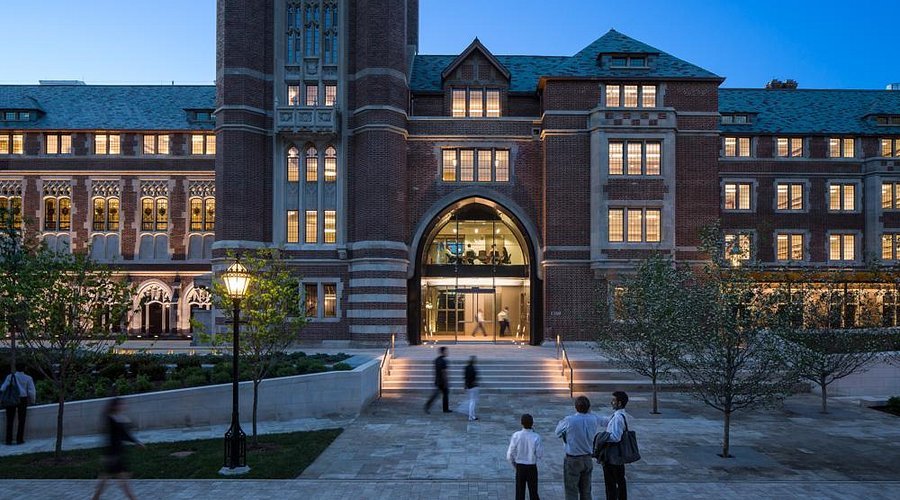
The campus is known for its Gothic-inspired architecture, quadrangles, historic buildings, libraries, modern research facilities, and green spaces.
Walking through the campus provides a mixture of historic and contemporary architecture.
9. Harper Memorial Library
Harper Memorial Library is one of the university’s historic buildings.
Libraries play an important role in academic life at the University of Chicago. Students and researchers have access to extensive collections supporting humanities, social sciences, sciences, professional studies, and interdisciplinary research.
The library system supports students working on everything from undergraduate papers to doctoral dissertations.
10. Campus Architecture
The architecture of the University of Chicago is an important part of its identity.
Many historic buildings reflect Gothic architectural traditions, creating a distinctive collegiate atmosphere.
At the same time, the university has constructed and renovated modern facilities designed for scientific research, collaborative learning, student activities, and contemporary academic work.
This combination of historic architecture and modern research infrastructure gives the campus a distinctive character.
11. Student Life
Although the University of Chicago is famous for academic rigor, student life extends far beyond classrooms and laboratories.
Students can participate in hundreds of organizations and activities.
These include:
- Academic organizations
- Cultural groups
- Student publications
- Performing arts
- Music organizations
- Debate and political groups
- Sports clubs
- Volunteer organizations
- Entrepreneurship groups
- Technology clubs
- Religious and philosophical organizations
- Community service programs
Student organizations allow people with different interests to build friendships and develop leadership skills.
12. Residential Life
Residential life is an important part of the undergraduate experience.
Students live in residential communities that provide opportunities to interact with classmates outside academic settings.
Residence halls can become communities where students study together, organize social events, discuss ideas, and participate in university traditions.
Living on campus can also make it easier for students to participate in activities, lectures, performances, and research opportunities.
13. Athletics
The University of Chicago participates in collegiate athletics and offers opportunities for students interested in sports.
Students can participate in varsity athletics, club sports, and recreational activities.
Athletics provide an important balance to academic life and allow students to develop teamwork, discipline, leadership, and time-management skills.
14. The City of Chicago
One of the university’s greatest advantages is its location.
Chicago is one of the largest and most internationally connected cities in the United States.
Students can take advantage of museums, theaters, businesses, technology companies, financial institutions, hospitals, nonprofit organizations, government agencies, and cultural communities.
The city provides opportunities for internships, research, employment, networking, and cultural experiences.
Major attractions such as museums, parks, architecture, music venues, restaurants, and professional sports also contribute to student life.
15. Research at the University of Chicago
Research is central to the university.
Faculty members and students conduct research addressing fundamental questions in science, society, technology, culture, medicine, and the humanities.
The university supports interdisciplinary research through specialized institutes and research centers.
This interdisciplinary environment allows researchers from different fields to collaborate.
For example, computer science researchers may work with biologists, economists, or social scientists. Physicists may collaborate with mathematicians. Medical researchers may work with engineers and data scientists.
16. Nobel Prize Connections
The University of Chicago has a long history of association with Nobel Prize winners.
Researchers and scholars connected with the university have received Nobel Prizes in areas including economics, physics, chemistry, medicine, and literature.
These achievements have contributed significantly to the university’s international reputation.
Nobel recognition is not the only measure of academic excellence, but the university’s long record of major scholarly achievements demonstrates the depth of its research environment.
17. The Chicago School of Economics
The Chicago School of Economics deserves special attention.
Economists associated with the university developed influential theories concerning markets, monetary policy, regulation, human capital, and economic behavior.
Milton Friedman was one of the best-known economists associated with the Chicago tradition.
His work on monetary economics and economic policy had major international influence.
Other scholars associated with Chicago economics also made important contributions to economic theory.
The university’s economics tradition continues to influence academic research and public policy discussions.
18. The Chicago School of Sociology
The Chicago School of Sociology is another major contribution.
During the early twentieth century, sociologists used Chicago as a living laboratory.
The city was experiencing rapid population growth, immigration, industrialization, urban development, and social change.
Researchers studied neighborhoods, communities, crime, poverty, migration, and social relationships.
Their research helped establish urban sociology as an important field of study.
19. Enrico Fermi and Nuclear Physics
Enrico Fermi is one of the most important scientists associated with the University of Chicago.
In 1942, Fermi and his team demonstrated the first controlled, self-sustaining nuclear chain reaction.
The experiment represented a major scientific achievement and changed the course of nuclear physics.
It also demonstrated the university’s ability to support ambitious scientific research.
The legacy of this work remains an important part of University of Chicago history.
20. Admissions to the University of Chicago
Admission to the University of Chicago is highly selective.
Applicants are generally evaluated on academic achievement, intellectual curiosity, extracurricular involvement, personal qualities, writing, and the overall strength of their application.
Because admissions policies can change, prospective students should always consult the university’s official admissions resources for current requirements, deadlines, testing policies, and application procedures.
A strong application should demonstrate more than excellent grades.
The university seeks students who are intellectually curious and willing to explore challenging ideas.
21. How to Prepare for Admission
Students interested in applying should begin preparation early.
Important steps include:
- Building a strong academic record
- Taking challenging courses when available
- Developing strong writing skills
- Participating meaningfully in extracurricular activities
- Exploring academic interests beyond school requirements
- Preparing carefully for required application materials
- Researching financial aid opportunities
- Meeting application deadlines
- Writing thoughtful personal essays
- Understanding the university’s academic culture
Quality is generally more important than simply collecting extracurricular activities.
A student who demonstrates genuine commitment to a few interests may present a stronger application than someone who joins many activities without meaningful involvement.
22. International Students
The University of Chicago attracts students from many countries.
International applicants bring different educational backgrounds, languages, cultures, and perspectives to campus.
For international students, applying to a U.S. university can involve additional considerations such as academic credential evaluation, English-language requirements where applicable, immigration documentation, financial planning, and visa procedures.
Students should check current official university guidance because requirements can change.
23. Financial Aid
The cost of attending a leading private university can be significant, but financial aid can make education more accessible.
The University of Chicago offers financial aid programs for eligible students.
Financial aid may include grants, scholarships, work opportunities, and other forms of assistance depending on the student’s circumstances and the university’s policies.
Prospective students should carefully review the latest financial aid information before applying.
24. Scholarships
Scholarships can play an important role in making university education affordable.
Some scholarships are based on financial need, while others may recognize academic achievement, leadership, special talents, or other criteria.
Students should research available funding early.
International students should also investigate scholarships and financial assistance specifically available to applicants from outside the United States.
25. Cost of Living in Chicago
Chicago generally offers a wide range of living options compared with many other major U.S. cities.
However, students still need to budget for housing, food, transportation, books, personal expenses, health-related costs, and other necessities.
The actual cost of living depends heavily on housing choices and personal lifestyle.
Students living near campus may spend differently from students living farther away.
Creating a realistic annual budget is important before enrollment.
26. Career Opportunities
Graduates of the University of Chicago enter many different industries.
Career paths include:
- Finance
- Consulting
- Technology
- Healthcare
- Law
- Government
- Academia
- Research
- Journalism
- Public policy
- Entrepreneurship
- Nonprofit organizations
- Arts and culture
- International organizations
The university’s academic reputation and alumni network can provide graduates with opportunities to build professional connections.
27. Alumni Network
The University of Chicago has a large and influential alumni community.
Graduates have become economists, scientists, politicians, writers, business leaders, lawyers, physicians, academics, entrepreneurs, and public intellectuals.
The alumni community contributes to the university through mentoring, donations, research collaboration, professional networking, and other forms of engagement.
28. Famous Alumni and Scholars
The university has been associated with many notable figures.
These include economists such as Milton Friedman, scientists such as Enrico Fermi, writers and intellectuals, legal scholars, political scientists, business leaders, and Nobel laureates.
The university’s influence can be seen across many professions.
Its graduates have contributed to academia, government, business, science, journalism, medicine, literature, and public policy.
29. Libraries and Academic Resources
Students benefit from extensive library and research resources.
Libraries provide access to books, journals, databases, archives, manuscripts, digital collections, and research assistance.
For students writing academic papers, these resources are particularly valuable.
Graduate students and researchers can also access specialized collections supporting advanced scholarship.
30. Innovation and Entrepreneurship
The University of Chicago supports innovation and entrepreneurship through courses, research programs, student organizations, and initiatives designed to connect academic ideas with practical applications.
Students interested in starting companies can find opportunities to develop business ideas, meet mentors, collaborate with other students, and learn about entrepreneurship.
Chicago itself has a growing technology and startup ecosystem, providing additional opportunities.
31. Diversity and Global Community
The university’s student body includes people from different countries, cultures, educational backgrounds, and academic interests.
This diversity can create a richer intellectual environment.
Students encounter classmates with different perspectives and experiences, which can encourage discussion and broaden understanding.
A global university community is particularly valuable for students preparing for careers that involve international organizations and multicultural environments.
32. Arts and Culture
The University of Chicago has an active arts and cultural environment.
Students can participate in theater, music, dance, visual arts, creative writing, film, and other artistic activities.
The city of Chicago also offers world-class cultural institutions.
Students can explore museums, galleries, concerts, festivals, theater productions, and architectural landmarks.
33. Student Publications
Student journalism and publishing are important components of campus culture.
Students can participate in newspapers, magazines, academic journals, literary publications, podcasts, and other forms of media.
These activities provide opportunities to develop writing, editing, research, communication, and leadership skills.
34. Academic Challenges
The University of Chicago is known for academic intensity.
Students may face demanding reading assignments, complex problem sets, research projects, essays, presentations, and examinations.
Time management is therefore extremely important.
Students who succeed typically develop effective study habits and learn how to balance academic work with social life and extracurricular activities.
35. Benefits of Studying at the University of Chicago
There are many potential benefits to attending the university.
Strong Academic Environment
Students study alongside talented peers and learn from experienced scholars.
Research Opportunities
Undergraduates and graduate students may have opportunities to participate in research.
Interdisciplinary Education
Students can explore connections between different academic disciplines.
Global Reputation
The university has an internationally recognized academic reputation.
Chicago Location
Students benefit from living in one of the world’s major cities.
Alumni Network
Graduates join an influential global alumni community.
Intellectual Culture
Students are encouraged to question assumptions and explore difficult ideas.
36. Potential Challenges
The university is not necessarily the right choice for every student.
Its academic environment can be demanding.
Students who prefer a relaxed academic workload may find the experience challenging.
The cost of attendance can also be significant, although financial aid can reduce expenses for eligible students.
The large city environment may also feel overwhelming to students who prefer small-town campuses.
Understanding both the advantages and challenges can help prospective students make informed decisions.
37. Why Students Choose the University of Chicago
Students choose the university for different reasons.
Some are attracted by economics.
Others are interested in physics, mathematics, law, medicine, literature, social sciences, computer science, or the humanities.
Many students are attracted by the Core Curriculum and the university’s intellectual culture.
Others value the research opportunities and the location in Chicago.
For many students, the combination of rigorous academics, research, culture, and urban opportunities is the university’s greatest attraction.
38. Tips for New Students
New students can make their university experience stronger by taking advantage of available resources.
Attend lectures and academic events.
Meet professors during office hours.
Join student organizations.
Explore Chicago.
Build friendships.
Use libraries and academic support services.
Experiment with different subjects.
Do not be afraid to ask questions.
University is not only about earning a degree. It is also an opportunity to develop intellectual independence, communication skills, professional relationships, and a broader understanding of the world.
39. The Future of the University of Chicago
The University of Chicago continues to evolve as higher education changes.
Modern universities face new challenges involving technology, artificial intelligence, climate change, healthcare, economic inequality, global politics, and rapidly changing labor markets.
The University of Chicago is positioned to contribute to these conversations through research and interdisciplinary scholarship.
Future research may increasingly connect computer science, medicine, economics, environmental studies, public policy, and other disciplines.
40. University of Chicago and Artificial Intelligence
Artificial intelligence is changing education and research.
The University of Chicago community participates in research involving computing, data, statistics, machine learning, and related fields.
AI creates opportunities for scientific discovery, but it also raises questions about ethics, privacy, employment, education, and society.
Universities such as Chicago have an important role in studying both the technical capabilities and social consequences of emerging technologies.
41. University of Chicago and Global Research
Modern academic research increasingly depends on international collaboration.
Researchers at the University of Chicago collaborate with scholars and institutions around the world.
International cooperation can strengthen research by bringing together different expertise, data sources, perspectives, and methodologies.
This global approach is especially important in areas such as climate science, economics, public health, international relations, and technology.
42. A Typical Student Experience
A typical day can vary significantly depending on a student’s program.
An undergraduate may attend lectures, participate in discussion-based classes, complete reading assignments, meet classmates for group study, attend a student organization meeting, and spend time in a library.
A graduate student may spend much of the day conducting research, teaching, attending seminars, meeting an advisor, and working on academic writing.
The variety of experiences is one of the strengths of a major research university.
43. How to Make the Most of University Life
Students can maximize their experience by being proactive.
Do not limit university life to required classes.
Explore unfamiliar subjects.
Attend public lectures.
Talk to professors.
Join organizations.
Seek internships.
Participate in research.
Develop professional relationships.
Travel when possible.
Use the city as an extension of the classroom.
These experiences can contribute significantly to personal and professional development.
44. University of Chicago Reputation
The University of Chicago is widely recognized as a leading research university.
Its reputation comes from many factors, including influential faculty, Nobel Prize recognition, major research discoveries, strong academic programs, distinguished alumni, rigorous education, and international scholarship.
However, students should not choose a university solely because of rankings.
Academic fit, financial affordability, campus environment, program quality, research opportunities, location, and career goals should all be considered.
45. Comparing the University of Chicago With Other Universities
The University of Chicago is often compared with institutions such as Harvard, Yale, Princeton, Stanford, MIT, Columbia, and other highly selective universities.
Each institution has its own strengths.
Chicago is particularly distinctive for its intellectual culture, Core Curriculum, research tradition, economics, social sciences, and interdisciplinary scholarship.
Students should compare universities based on their own academic interests rather than relying exclusively on overall rankings.
46. Why the University of Chicago Matters
The University of Chicago has had a major influence on modern intellectual life.
Its scholars have changed how people think about economics, society, politics, science, law, education, literature, and human behavior.
Its research has contributed to discoveries with global consequences.
Its alumni have worked in universities, governments, corporations, hospitals, courts, news organizations, laboratories, and nonprofit institutions.
The university’s influence therefore extends far beyond its physical campus.
47. Frequently Asked Questions
What is the University of Chicago known for?
The University of Chicago is particularly known for rigorous academics, research, economics, sociology, physics, law, medicine, and its distinctive Core Curriculum.
Where is the University of Chicago located?
The university is located in the Hyde Park neighborhood of Chicago, Illinois, United States.
When was the University of Chicago founded?
The modern University of Chicago was founded in 1890 with major financial support from John D. Rockefeller.
Is the University of Chicago a research university?
Yes. Research is one of the central missions of the university.
Is the University of Chicago difficult to get into?
Admission is highly selective, and applicants typically need strong academic preparation and a compelling overall application.
What is the University of Chicago Core Curriculum?
The Core Curriculum is a broad undergraduate academic program designed to expose students to major ideas and methods across different fields.
Is the University of Chicago good for international students?
The university welcomes students from around the world and has a diverse international community.
What subjects is Chicago University famous for?
The university is particularly famous for economics, sociology, physics, mathematics, law, medicine, political science, and several humanities disciplines.
What is the Chicago School of Economics?
It refers to a major tradition in economic thought associated with economists connected to the University of Chicago.
Who founded the University of Chicago?
The modern university was established in 1890 with John D. Rockefeller as its major financial benefactor and William Rainey Harper as its first president.
What happened at the University of Chicago in 1942?
Scientists led by Enrico Fermi achieved the first controlled, self-sustaining nuclear chain reaction as part of wartime research.
Does the University of Chicago have undergraduate programs?
Yes. The university offers undergraduate education across a wide range of academic fields.
Does the University of Chicago offer graduate programs?
Yes. It offers numerous master’s and doctoral programs as well as professional degrees.
What is student life like at the University of Chicago?
Student life combines rigorous academics with clubs, athletics, arts, cultural organizations, social activities, and opportunities throughout Chicago.
Is Chicago a good city for university students?
Chicago provides extensive cultural, professional, educational, and entertainment opportunities, although students should consider the challenges and costs of living in a major city.
Does the University of Chicago offer financial aid?
The university provides financial aid to eligible students. Applicants should check the latest official policies and requirements.
What makes the University of Chicago different?
Its intellectual culture, Core Curriculum, research strength, interdisciplinary approach, and strong academic traditions make it distinctive.
48. Final Thoughts
The University of Chicago represents a powerful combination of history, research, intellectual curiosity, and academic ambition.
Since its founding in 1890, the university has developed from a new research institution into one of the world’s most influential centers of higher education.
Its contributions to economics, sociology, physics, law, medicine, mathematics, political science, literature, and many other fields have shaped modern scholarship.
For students, the university offers much more than a degree. It provides an environment in which challenging questions are encouraged, evidence is valued, and ideas are examined from multiple perspectives.
The University of Chicago’s location in Chicago adds another major advantage. Students have access to a major international city with opportunities in business, technology, culture, healthcare, government, finance, research, and the arts.
At the same time, the university’s demanding academic culture means that students should be prepared for serious intellectual work. Successful students are usually those who enjoy learning, asking questions, writing, researching, debating ideas, and exploring subjects beyond the obvious boundaries of their major.
For prospective students, the most important question is not simply whether the University of Chicago is prestigious. A better question is whether its academic philosophy, campus environment, location, programs, research opportunities, and financial structure match the student’s personal goals.
For those who enjoy intellectual challenge and want to study at a major research university, the University of Chicago can offer an extraordinary educational experience.
From its historic beginnings under William Rainey Harper to its continuing role in global research, the university remains an important institution in American and international higher education.
Its history demonstrates the power of research and education to influence society, while its modern academic community continues to investigate some of the world’s most complicated questions.
Whether a student is interested in economics, science, medicine, law, humanities, social sciences, computer science, or another field, the University of Chicago provides an environment built around inquiry and discovery.
That commitment to intellectual exploration is ultimately what makes the University of Chicago one of the most distinctive universities in the world.