SEO Title: Tsinghua University: History, Programs, Admissions, Rankings, Campus Life & FAQs
Meta Description: Explore Tsinghua University in depth, including its history, academic programs, admissions, research, campus life, international opportunities, notable alumni, rankings, scholarships, and frequently asked questions.
Focus Keywords: Tsinghua University, Tsinghua University China, Tsinghua University Beijing, Tsinghua University history, Tsinghua University admissions, Tsinghua University programs, Tsinghua University ranking, study at Tsinghua University, Tsinghua University scholarships
Introduction
Tsinghua University is one of the most prestigious and influential universities in China and one of the best-known research universities in the world. Located in Beijing, the university has developed from a preparatory institution established in the early twentieth century into a comprehensive university with major strengths in engineering, technology, natural sciences, social sciences, economics, management, humanities, architecture, medicine, public policy, and many interdisciplinary fields.
For students interested in studying in China, Tsinghua University represents an opportunity to experience a highly competitive academic environment while living in one of the world’s most historically important and technologically advanced capitals. The university is particularly recognized for its research capabilities, engineering and technology education, innovation ecosystem, international collaborations, and influential alumni.
Tsinghua’s story is also closely connected with China’s modern educational and scientific development. Over more than a century, the institution has experienced major transformations in its educational mission, organizational structure, academic disciplines, and international role. Today, it combines traditional academic values with modern research, entrepreneurship, digital technology, and global cooperation.
This comprehensive guide explores Tsinghua University’s history, location, academic structure, admissions, student experience, research, international programs, scholarships, campus environment, career opportunities, notable alumni, and frequently asked questions.
1. What Is Tsinghua University?
Tsinghua University is a major public research university located in Beijing, China. It is widely regarded as one of China’s leading institutions for higher education and research.
The university offers education at undergraduate, master’s, and doctoral levels and maintains a broad academic portfolio. Although Tsinghua is particularly famous for engineering and technology, its academic activities extend far beyond these areas.
Important fields include:
- Engineering
- Computer science
- Artificial intelligence
- Electrical engineering
- Mechanical engineering
- Civil engineering
- Architecture
- Environmental science
- Materials science
- Physics
- Chemistry
- Mathematics
- Economics
- Business and management
- Public policy
- Law
- Humanities
- Social sciences
- Medicine
- Life sciences
- Information technology
- Energy research
Tsinghua’s multidisciplinary character is one of its major strengths. Modern challenges such as climate change, artificial intelligence, sustainable development, public health, energy security, and urbanization often require cooperation between several academic disciplines. Tsinghua has developed numerous research centers and programs designed to encourage such collaboration.
2. Where Is Tsinghua University Located?
Tsinghua University is located in Beijing, the capital of China.
The university’s campus is situated in the northwestern part of Beijing, in the Haidian District, an area known for its concentration of universities, research institutions, technology companies, and educational organizations.
Its location provides students with access to a major international city. Beijing is home to government institutions, multinational companies, research organizations, cultural attractions, museums, libraries, technology businesses, and numerous universities.
The surrounding university district also contributes to an academic atmosphere. Students can interact with researchers and students from other institutions while benefiting from Beijing’s extensive transportation and cultural infrastructure.
3. A Brief History of Tsinghua University
The history of Tsinghua University begins in the early twentieth century.
Tsinghua was established in 1911 as Tsinghua School. Its early development was associated with an educational initiative connected with funds from the United States following the Boxer Indemnity.
The institution initially played an important role in preparing Chinese students for study in the United States.
Over time, its educational mission expanded.
Early Development
During its early years, Tsinghua focused heavily on preparing students for overseas study. The institution gradually developed its own academic programs, faculty, laboratories, and campus facilities.
As China’s educational system changed, Tsinghua also transformed.
In the 1920s, the institution developed toward university-level education and became known as Tsinghua University.
The university increasingly emphasized scientific education, engineering, humanities, and research.
Growth During the Republican Era
During the Republican period, Tsinghua became an important center of intellectual and scientific activity.
Its faculty included influential scholars, scientists, writers, philosophers, and educators. The university developed a reputation for academic excellence and intellectual openness.
The institution’s development was interrupted by war and political instability.
The War Years
During the Second Sino-Japanese War, many Chinese universities were forced to relocate away from areas affected by the conflict.
Tsinghua became part of the National Southwestern Associated University, commonly known as Lianda, together with Peking University and Nankai University.
This temporary university became one of the most important centers of higher education in wartime China.
The experience strengthened the intellectual traditions of the participating institutions and produced generations of graduates who later became important figures in science, education, literature, and public life.
Post-1949 Transformation
After the establishment of the People’s Republic of China in 1949, Tsinghua underwent major changes.
The university became increasingly focused on engineering and technical education. Its role became closely associated with China’s industrialization and scientific development.
Engineering disciplines received substantial emphasis, and Tsinghua developed into one of the country’s leading institutions for technical education.
Reform and Modernization
From the late twentieth century onward, China’s economic reforms and internationalization created new opportunities for Tsinghua.
The university expanded its academic disciplines and increased international cooperation.
It developed stronger programs in economics, management, law, public policy, humanities, social sciences, life sciences, and medicine alongside its traditional strengths in engineering and science.
Today, Tsinghua is a comprehensive research university with a global academic presence.
4. Tsinghua University Campus
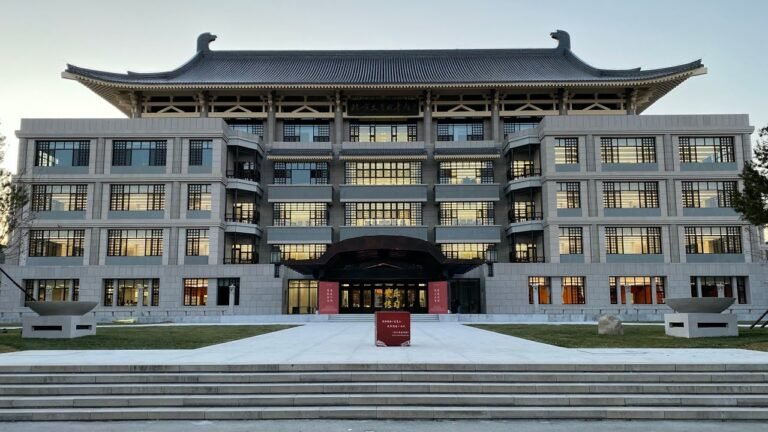
Tsinghua’s campus is one of its most recognizable features.
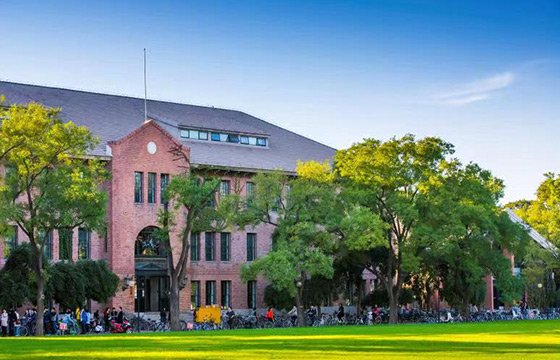
The university occupies a large campus in Beijing with a combination of historic architecture, modern academic buildings, laboratories, libraries, residential facilities, sports areas, gardens, and open spaces.
The campus reflects different stages of Tsinghua’s development.
Historic buildings demonstrate the university’s early twentieth-century heritage, while modern research facilities represent its contemporary role as a global research institution.
Historic Architecture
Some parts of the campus feature architectural influences associated with the university’s early history and international connections.
The combination of traditional Chinese landscape design and Western architectural influences gives Tsinghua a distinctive character.
Gardens and Natural Areas
The campus is also known for attractive landscaped areas.
Students can find trees, gardens, paths, ponds, and open spaces that provide opportunities for relaxation and informal study.
This combination of academic facilities and green areas contributes to the campus environment.
5. Academic Structure
Tsinghua University has a broad academic structure consisting of schools, departments, institutes, research centers, and interdisciplinary programs.
Its academic organization changes over time as new fields emerge and existing departments evolve.
Major academic areas include:
Engineering
Engineering remains one of Tsinghua’s most internationally recognized areas.
Students can study fields such as:
- Mechanical engineering
- Electrical engineering
- Civil engineering
- Chemical engineering
- Environmental engineering
- Aerospace engineering
- Industrial engineering
- Materials engineering
- Information engineering
Engineering research at Tsinghua is closely connected with industry, government research priorities, and technological innovation.
Computer Science
Computer science is another major strength.
The university has research activity in:
- Artificial intelligence
- Machine learning
- Computer systems
- Software engineering
- Data science
- Computer networks
- Robotics
- Human-computer interaction
- Information security
The rapid development of China’s technology industry has increased demand for highly trained computer scientists and engineers.
Natural Sciences
Tsinghua also supports research and education in mathematics, physics, chemistry, biology, materials science, and related fields.
These disciplines provide the scientific foundation for advanced research and engineering innovation.
Architecture
Architecture has a particularly important place in Tsinghua’s history.
The university has long been associated with architectural education and research, and its programs have influenced architectural practice and education in China.
Economics and Management
Tsinghua’s business and management education is also internationally recognized.
Programs cover areas such as:
- Finance
- Marketing
- Entrepreneurship
- Strategy
- Operations
- Economics
- Management
- Business analytics
The university’s business school attracts students and professionals interested in China’s rapidly changing economy.
Law and Public Policy
Tsinghua offers education and research in law, public administration, international affairs, and public policy.
These programs are particularly relevant to students interested in government, international organizations, diplomacy, regulatory policy, and public administration.
6. Tsinghua University Research
Research is central to Tsinghua University’s identity.
The university conducts research across science, technology, medicine, social sciences, humanities, engineering, and public policy.
Its research environment benefits from China’s large scientific and technological ecosystem as well as international partnerships.
Artificial Intelligence
Artificial intelligence has become one of the university’s important research areas.
Researchers work on topics including machine learning, computer vision, natural language processing, robotics, intelligent systems, and AI applications.
Environmental Research
Climate change and environmental sustainability are major global challenges.
Tsinghua researchers investigate:
- Renewable energy
- Environmental pollution
- Climate policy
- Sustainable cities
- Water management
- Energy systems
- Low-carbon technologies
Energy
Energy research includes traditional energy systems as well as renewable and low-carbon technologies.
The university works on energy efficiency, power systems, energy storage, sustainable development, and related areas.
Biomedical Research
Tsinghua has expanded its activities in medicine, biotechnology, biomedical engineering, life sciences, and health-related research.
These fields combine biological science with engineering and technological innovation.
7. Tsinghua University and Innovation
Innovation is a major part of Tsinghua’s modern identity.
The university supports entrepreneurship, technology transfer, research commercialization, and collaboration with businesses.
Students and researchers can participate in projects that connect academic discoveries with real-world applications.
Tsinghua’s connection with Beijing’s technology ecosystem creates additional opportunities.
The city is home to many technology companies and startups, making it possible for students to explore internships, research collaborations, entrepreneurship, and employment.
8. International Reputation
Tsinghua University has a strong international reputation.
It participates in global academic networks and collaborates with universities and research institutions around the world.
International cooperation includes:
- Joint research projects
- Student exchanges
- Faculty exchanges
- International conferences
- Dual-degree programs
- Joint educational initiatives
- Research partnerships
The university attracts students from many countries, creating a diverse academic environment.
For international students, studying at Tsinghua can provide both an internationally recognized education and direct exposure to China’s society, economy, technology sector, and culture.
9. Tsinghua University Admissions
Admission to Tsinghua University is highly competitive.
Requirements vary depending on:
- Undergraduate or graduate level
- Academic program
- Applicant nationality
- Language of instruction
- Degree type
- Department-specific requirements
Students should always check the university’s official admissions information for the most current requirements because application rules, deadlines, required documents, and eligibility criteria can change.
Undergraduate Admission
International undergraduate applicants generally need strong academic preparation.
Depending on the program, applicants may need to provide academic transcripts, examination results, language qualifications, recommendation materials, personal statements, and other documents.
Graduate Admission
Master’s and doctoral applicants usually need a relevant previous degree.
Graduate admissions can also involve:
- Academic transcripts
- Research experience
- Personal statement
- Recommendation letters
- Language proficiency
- Research proposal
- Interviews
- Department-specific assessments
The exact requirements depend on the program.
10. Language Requirements
Language requirements depend on the program.
Some programs are taught primarily in Chinese, while others offer substantial English-language instruction.
International students should carefully check the language requirements of their chosen program.
Chinese-language programs may require proof of Chinese proficiency, while English-taught programs may require evidence of English proficiency.
Students should not assume that one language certificate is accepted for every program.
11. Scholarships at Tsinghua University
Studying at a leading international university can be expensive, particularly for international students.
Scholarships can help reduce the financial burden.
Potential funding opportunities may include:
- University scholarships
- Government scholarships
- Chinese Government Scholarship programs
- Departmental scholarships
- Research funding
- Tuition support
- Stipends for eligible graduate students
Scholarship availability and eligibility vary.
Students should carefully review official scholarship information and application deadlines before applying.
A strong academic record can be important for competitive scholarships.
12. Student Life at Tsinghua
Student life at Tsinghua extends beyond lectures and examinations.
Students can participate in:
- Student organizations
- Academic societies
- Sports clubs
- Cultural activities
- Volunteer programs
- Entrepreneurship competitions
- Research projects
- International student communities
- Conferences and seminars
University life provides opportunities for students to develop communication, leadership, teamwork, and organizational skills.
Clubs and Societies
Student clubs cover a wide range of interests.
Students may find organizations related to:
- Technology
- Entrepreneurship
- Sports
- Music
- Arts
- Literature
- Languages
- Debate
- International culture
- Social service
These activities can help students build friendships and develop skills outside the classroom.
13. Accommodation
Tsinghua provides residential options for students, including facilities for international students.
Accommodation arrangements can vary according to student status and program.
Students should review current housing information before arrival.
Living on or near campus can make it easier to attend classes, use libraries, participate in activities, and interact with other students.
14. Dining at Tsinghua
University dining is an important part of student life.
Campus dining facilities provide students with a variety of food options.
Because Tsinghua has a large student population, campus food services can offer different styles of Chinese cuisine and other options.
International students may need some time to become familiar with local dishes, ingredients, and dining customs.
Beijing also provides a huge variety of restaurants and food cultures outside campus.
15. Transportation Around Beijing
Tsinghua’s location in Beijing provides access to extensive public transportation.
Students can use public buses, subway services, taxis, bicycles, ride-hailing services, and other transportation options.
Beijing’s transportation network makes it possible for students to explore museums, historical sites, technology districts, shopping areas, cultural venues, and other parts of the city.
16. Why Study at Tsinghua University?
There are many reasons students consider Tsinghua.
Academic Excellence
Tsinghua has a strong academic reputation, particularly in engineering, science, technology, architecture, economics, and management.
Research Opportunities
Students can potentially participate in advanced research projects and work with experienced researchers.
Location
Being in Beijing provides access to China’s political, cultural, scientific, and technological center.
International Exposure
International partnerships and a diverse student population can provide global academic experiences.
Career Opportunities
Graduates can pursue careers in research, technology, engineering, finance, consulting, government, education, entrepreneurship, and many other fields.
17. Challenges of Studying at Tsinghua
Tsinghua is not necessarily an easy university experience.
Highly Competitive Environment
Students often work alongside highly accomplished classmates.
This can be motivating but also demanding.
Academic Workload
Many programs involve intensive coursework, projects, laboratories, examinations, and research.
Language and Cultural Adjustment
International students may need time to adapt to Chinese language, culture, food, academic practices, and daily life.
Cost of Living
Although living costs can vary significantly, Beijing is one of China’s major metropolitan areas, and students need to budget carefully for accommodation, food, transportation, insurance, and personal expenses.
18. Tsinghua University Rankings
Tsinghua University frequently appears among the world’s leading universities in major international rankings.
Its exact position can vary between ranking organizations and from year to year.
Different ranking systems use different methodologies, including:
- Academic reputation
- Research output
- Citations
- Internationalization
- Employer reputation
- Faculty indicators
- Research impact
Therefore, students should not judge the university solely by one ranking number.
For prospective students, factors such as program quality, faculty expertise, research opportunities, location, tuition, scholarships, career outcomes, and personal academic goals can be more useful.
19. Tsinghua University and Engineering
Engineering is one of the fields most strongly associated with Tsinghua.
The university has contributed to the education of engineers involved in China’s infrastructure, manufacturing, energy, transportation, telecommunications, computing, and technological development.
Engineering students often have access to laboratories and research projects.
Modern engineering education increasingly combines traditional engineering with computer science, artificial intelligence, materials science, environmental studies, and entrepreneurship.
20. Tsinghua University and Computer Science
The global technology industry has increased the importance of computer science education.
Tsinghua’s computer science ecosystem includes research and education in areas such as artificial intelligence, algorithms, software systems, computer architecture, robotics, and data-related technologies.
Students interested in technology can potentially benefit from Beijing’s strong technology ecosystem.
The combination of university research and industry connections can create valuable opportunities for internships, projects, and future careers.
21. Tsinghua University and Business Education
Business education has become increasingly important within Tsinghua’s comprehensive academic structure.
Students interested in management can study subjects such as entrepreneurship, finance, strategy, marketing, operations, economics, and organizational behavior.
The university’s location in Beijing provides access to a large business environment.
For international students, business education at Tsinghua can also provide insight into China’s economy and its role in global trade.
22. Architecture at Tsinghua
Tsinghua has a long-standing reputation in architecture.
Architectural education at the university has contributed significantly to China’s architectural profession.
Students may study:
- Architectural design
- Urban planning
- Landscape architecture
- Building technology
- Sustainable architecture
- Architectural history
- Urban development
Architecture students can also learn from Beijing’s unique urban environment, where historic neighborhoods and modern skyscrapers exist side by side.
23. Notable Alumni
Tsinghua University has produced many influential graduates.
Its alumni include prominent figures in:
- Science
- Engineering
- Technology
- Government
- Business
- Education
- Architecture
- Literature
- Public administration
One of the university’s best-known alumni is Hu Jintao, who studied hydraulic engineering at Tsinghua and later became President of China.
Other alumni and former students have contributed to China’s scientific and technological development, including Nobel Prize-winning physicist Yang Chen-Ning, who studied at Tsinghua before continuing his academic career abroad.
The broader Tsinghua alumni community is influential in many sectors.
24. Tsinghua’s Role in Chinese Science and Technology
Tsinghua University has played a major role in China’s scientific development.
Its researchers have contributed to fields ranging from engineering and computing to energy, materials, environmental science, and biomedical research.
The university’s scientific role has expanded alongside China’s rapid technological development.
Today, it is involved in research addressing both national and global challenges.
25. Sustainability at Tsinghua
Sustainability has become an increasingly important research and educational priority.
The university is involved in research concerning:
- Climate change
- Renewable energy
- Environmental protection
- Sustainable cities
- Green buildings
- Energy efficiency
- Pollution control
- Sustainable transportation
Beijing itself provides an important environment for studying urban sustainability because of its enormous population, transportation demands, energy consumption, and environmental challenges.
26. Tsinghua and Entrepreneurship
Entrepreneurship is another important part of the university ecosystem.
Students and researchers can explore startup ideas through competitions, innovation programs, incubators, mentorship opportunities, and industry connections.
Technology-focused startups can particularly benefit from the university’s research environment.
Entrepreneurship education encourages students to think about how academic knowledge can become practical products or services.
27. International Students at Tsinghua
International students bring an important global dimension to campus life.
They may come from Asia, Europe, Africa, North America, Latin America, and other regions.
International students can experience:
- Chinese culture
- Chinese language
- International friendships
- Research collaboration
- Global conferences
- Cultural exchange
- Beijing’s urban life
Studying in another country also requires flexibility and cultural awareness.
Students who actively participate in campus activities can make the most of the international environment.
28. Career Opportunities After Graduation
Tsinghua graduates can pursue careers across a wide range of sectors.
Potential career areas include:
- Engineering
- Technology
- Finance
- Consulting
- Research
- Government
- Education
- Architecture
- Manufacturing
- Entrepreneurship
- International organizations
- Environmental industries
- Healthcare
- Data science
Career opportunities depend on the student’s degree, skills, experience, language ability, professional network, and employment eligibility.
29. How to Prepare for Tsinghua University
Students considering Tsinghua should begin preparation early.
Step 1: Choose a Program
Identify the academic field that matches your interests and career plans.
Step 2: Check Eligibility
Review the official requirements for your nationality, academic level, and selected program.
Step 3: Prepare Academic Documents
Collect transcripts, certificates, examination results, recommendation letters, and other required documents.
Step 4: Prepare Language Qualifications
Determine whether your program requires Chinese, English, or another language qualification.
Step 5: Research Scholarships
Look for scholarships that match your eligibility.
Step 6: Prepare Your Application
Write a strong personal statement and, where applicable, research proposal.
Step 7: Apply Before the Deadline
Application deadlines vary by program.
Never rely on an old deadline from an unofficial website.
30. Tips for International Students
International students can make their experience easier by preparing before arrival.
Learn basic Mandarin phrases, even if your program is taught in English.
Understand Chinese academic and social customs.
Keep digital and physical copies of important documents.
Create a realistic monthly budget.
Learn how local transportation works.
Stay informed about visa and residence requirements.
Participate in student activities.
Build relationships with classmates and professors.
Take advantage of research opportunities.
Explore Beijing while maintaining a healthy academic routine.
31. Tsinghua University vs Other Top Universities
Tsinghua is often compared with other leading universities such as Peking University, Stanford, MIT, Harvard, Oxford, Cambridge, and other globally recognized institutions.
Each university has different strengths.
Tsinghua is particularly strong in engineering, technology, science, architecture, management, and interdisciplinary research.
Peking University has a particularly strong reputation in humanities, social sciences, sciences, and many other areas.
American and European universities may provide different approaches to curriculum flexibility, campus culture, research funding, and international mobility.
The best university depends on the student’s academic goals rather than rankings alone.
32. What Makes Tsinghua Unique?
Several characteristics distinguish Tsinghua.
First, it combines a long history with a modern research mission.
Second, it has a strong connection with China’s scientific and technological development.
Third, its Beijing location provides unusual access to China’s political, cultural, and economic environment.
Fourth, the university has extensive international connections.
Finally, it combines engineering and science with humanities, business, law, public policy, medicine, and social sciences.
This multidisciplinary structure allows students to approach complex problems from multiple perspectives.
Frequently Asked Questions About Tsinghua University
1. Is Tsinghua University a good university?
Yes. Tsinghua University is widely considered one of China’s leading universities and is highly regarded internationally, particularly for engineering, technology, science, architecture, management, and research.
2. Where is Tsinghua University located?
Tsinghua University is located in Beijing, China, in the Haidian District.
3. What is Tsinghua University famous for?
Tsinghua is especially famous for engineering, computer science, technology, architecture, scientific research, innovation, and influential alumni.
4. Is Tsinghua University difficult to get into?
Yes. Admission can be highly competitive, especially for popular programs and internationally recognized degrees.
5. Does Tsinghua University accept international students?
Yes. Tsinghua offers a range of programs and opportunities for international students.
6. Does Tsinghua teach programs in English?
Yes, Tsinghua offers some programs and courses in English, particularly at graduate level, but language requirements vary by program.
7. Does Tsinghua require Chinese language proficiency?
It depends on the program. Chinese-taught programs may require Chinese proficiency, while English-taught programs may have English-language requirements.
8. Can international students receive scholarships?
Yes. Various scholarships may be available to eligible international students, including university and government-supported opportunities.
9. What subjects can I study at Tsinghua?
Students can study engineering, computer science, science, architecture, economics, management, law, public policy, humanities, social sciences, medicine, and many other fields.
10. Is Tsinghua University in Beijing?
Yes. Tsinghua University is located in Beijing.
11. What is Tsinghua University’s history?
Tsinghua began in 1911 as Tsinghua School and gradually developed into a comprehensive research university.
12. Is Tsinghua University good for computer science?
Yes. Computer science and related technology fields are important areas of education and research at Tsinghua.
13. Is Tsinghua University good for engineering?
Yes. Engineering is one of the university’s most historically important and internationally recognized academic areas.
14. How can I apply to Tsinghua University?
Applicants should select a program, review the current eligibility requirements, prepare the required documents, and submit an application through the appropriate official admissions process.
15. How much does Tsinghua University cost?
Tuition and living costs depend on the program, degree level, accommodation, and individual lifestyle. Applicants should check current official fee information for their specific program.
16. Does Tsinghua have student housing?
Yes. The university provides residential options, although availability and arrangements depend on student category and current university policies.
17. What is student life like at Tsinghua?
Student life includes academic activities, clubs, sports, cultural events, research projects, competitions, and international activities.
18. Is Beijing a good city for university students?
Beijing offers extensive educational, cultural, professional, and transportation opportunities, making it an important destination for students.
19. Is Tsinghua better than Peking University?
Neither university is universally better. Tsinghua is especially renowned for engineering and technology, while Peking University has exceptional strengths across many disciplines. The best choice depends on the student’s program and goals.
20. Why should international students choose Tsinghua University?
International students may choose Tsinghua for its academic reputation, research opportunities, Beijing location, technology ecosystem, international environment, and broad selection of programs.
Conclusion
Tsinghua University has developed from a small early twentieth-century educational institution into one of China’s most important comprehensive research universities.
Its history is closely connected with China’s modern educational and scientific development. From its early role in preparing students for overseas study to its transformation into a major center for engineering, science, technology, management, architecture, public policy, medicine, and humanities, Tsinghua has continually adapted to changing national and global needs.
For students, Tsinghua offers much more than a university degree. Its location in Beijing provides access to one of the world’s major capitals, while its research environment connects students with advanced scientific and technological developments.
Engineering, computer science, artificial intelligence, architecture, business, environmental studies, natural sciences, and public policy are among the many areas in which students can build academic and professional expertise.
However, admission is competitive, academic expectations are high, and international students may need to adapt to a new language and cultural environment. Students who prepare carefully, research their chosen programs, investigate scholarship opportunities, and understand application requirements can significantly improve their chances of having a successful experience.
Ultimately, Tsinghua University’s greatest strength is its combination of history, academic excellence, scientific research, innovation, international cooperation, and connection to China’s rapidly developing economy and technology sector.
For students who want to study in China and are looking for a globally respected institution with strong research and technology capabilities, Tsinghua University remains one of the most compelling choices in higher education.
SEO Keyword Ideas
Tsinghua University, Tsinghua University China, Tsinghua University Beijing, Tsinghua University history, Tsinghua University admissions, Tsinghua University application, Tsinghua University scholarships, Tsinghua University ranking, Tsinghua University programs, Tsinghua University international students, study at Tsinghua University, Tsinghua University tuition fees, Tsinghua University engineering, Tsinghua University computer science, Tsinghua University architecture, Tsinghua University acceptance, best universities in China, top universities in China, universities in Beijing, study in China, Tsinghua University campus, Tsinghua University research, Tsinghua University courses, Tsinghua University graduate programs.